
Places of the Camino
Share


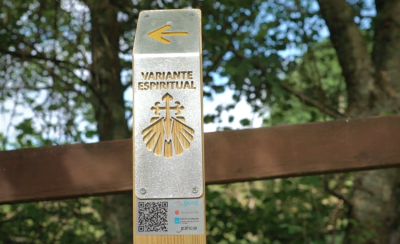
Reaching Santiago by following in the footsteps of the Apostle. This is the concept behind the Spiritual Variant, the Way of St. James that connects the Portuguese Way with what is known as the Maritime Route, or the Route of the Sea of Arousa and the Ulla River.
An alternative that, in addition to beautiful landscapes and places steeped in history, allows the pilgrim to relive part of the Traslatio—the legendary sea voyage of the Apostle’s body from Jerusalem to the lands of Iria Flavia.
The Spiritual Variant boasts numerous attractions: from spectacular nature trails to historic mills, monasteries, vineyards, beaches, and even the world’s only maritime-river Way of the Cross. It offers pilgrims excellent and abundant services, including our luggage transport service from lodging to lodging, the Paq Mochila.
Today we’ll tell you about its origins, the route, and the highlights you shouldn’t miss if you decide to take the Spiritual Route of the Portuguese Way.
Pontevedra: Starting Point of the Spiritual Route
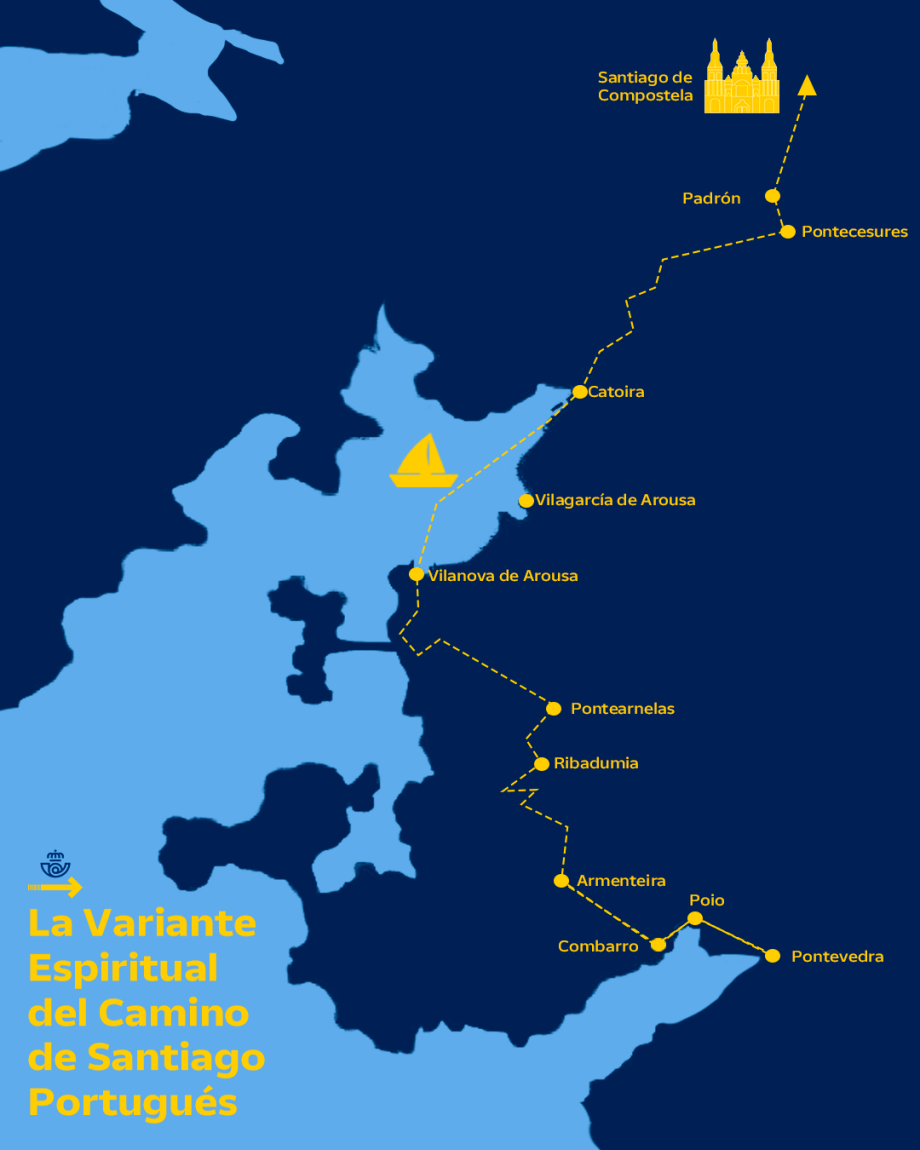
The Spiritual Route is, as its name suggests, an alternative to the main route of the Portuguese Way. Pontevedra is the starting point of this pilgrimage route, which extends over three stages to Padrón.
Pilgrims must decide in advance which route of the Portuguese Way they will take: the Inland Portuguese Way, which begins in Tui in Galicia and passes through towns such as O Porriño and Redondela on its way to Pontevedra; or the Coastal Portuguese Way, which begins in A Guarda and winds through beautiful coastal towns such as Baiona, Vigo, and Redondela before reaching Pontevedra.
In the city of Lérez, pilgrims must make another decision. The most common choice is to follow the classic route of the Portuguese Way: completing the three remaining stages to reach Santiago, with stops in Caldas de Reis and Padrón. The other option is to extend the journey by one more stage and take the Spiritual Variant, which passes through unique places such as Combarro, Ribadumia, Vilanova de Arousa, and Catoira before reaching Padrón.
The Spiritual Variant of the Portuguese Way consists of three stages, covering approximately 73 kilometers, which connect the Portuguese Way with the Arousa Sea Route and the Ulla River.
Monasteries, granaries, mills, and stone crosses
Stage 1 of the Spiritual Route. Pontevedra–Armenteira. Pontevedra is our starting point. More specifically, the Church of La Peregrina, patron saint of the city and of the Portuguese Way. The Spiritual Route begins after crossing the Burgo Bridge, where we must take the signposted turnoff to the left.
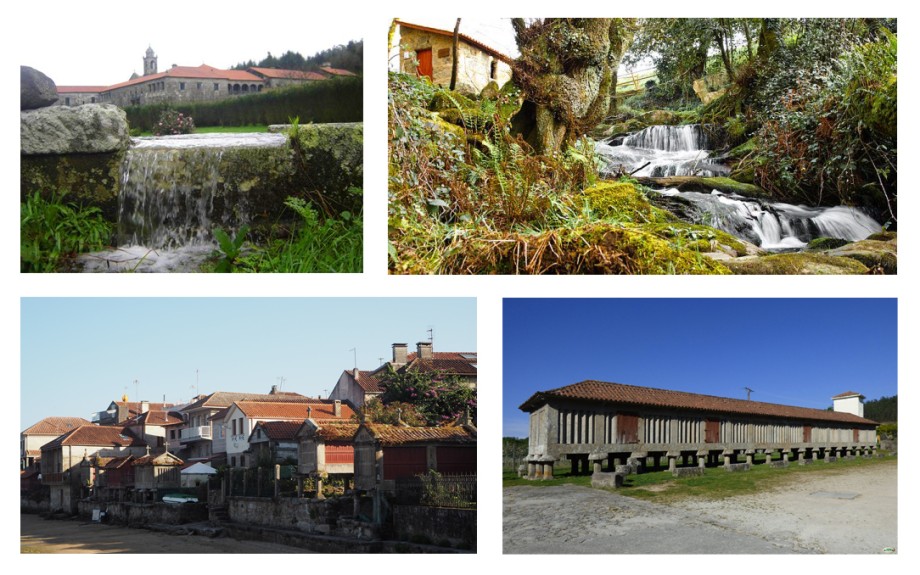
Twenty kilometers separate the pilgrim from Pontevedra to the end of this stage: the monastery of Armenteira, where we can spend the night at the guesthouse. Built in the Renaissance and Baroque styles (16th–17th centuries), the Cistercian monastery preserves its impressive Romanesque church, constructed in 1167.
The first stage of the Spiritual Route passes through other exceptional sites such as Poio, where you can admire its Benedictine monastery, designated a Site of Cultural Interest. Near the church, pilgrims can admire one of Galicia’s largest hórreos: the San Xoán de Poio hórreo, built in the late 18th century and measuring 33.46 meters long and 3.368 meters wide.
And to continue admiring Galicia’s rural architecture, there’s nothing better than stopping to rest in Combarro, a paradise of hórreos and cruceiros. In this beautiful fishing village, pilgrims will have the chance to see more than 60 hórreos, 30 of which line the banks of the Pontevedra estuary.
Stage 2 of the Spiritual Route. Armenteira – Vilanova de Arousa. The second stage of the Spiritual Route is characterized by the natural and cultural heritage of the O Salnés region. It follows the so-called “Ruta da Pedra e da Auga,” a nature trail that runs along the Armenteira River.
Amid lush riverside vegetation, pilgrims will discover another of Galicia’s most notable architectural and ethnographic features: its water mills. Along this route, which spans just over 7 kilometers, you’ll encounter as many as 50 of them, many of which have been restored.
Passing through vineyards and rural areas, the route takes you through Ribadumia and Pontearnelas until you reach your destination: the coastal town of Vilanova de Arousa. Here, pilgrims can stop to enjoy the beaches and visit A Illa de Arousa, a natural paradise with unique landscapes and breathtaking cuisine.
Reliving the Traslatio Along the Maritime Route
Stage 3 of the Spiritual Route: Vilanova de Arousa – Padrón. The third stage of the Spiritual Route is one of the most special on the Camino de Santiago. In Vilanova de Arousa, pilgrims can walk part of the Sea Route and follow in the footsteps of Theodore and Anastasius, the disciples of St. James the Apostle who transported his body from Palestine to Galicia.
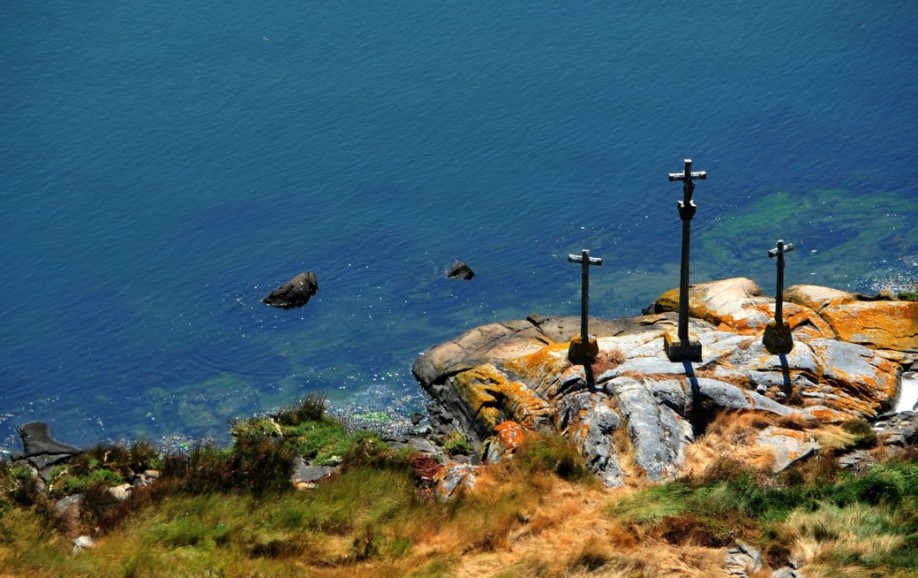
After taking a boat from the port of Vilanova, pilgrims will cross the Arousa Estuary and travel upriver along the Ulla, admiring the world’s only maritime-fluvial Way of the Cross—comprising 17 centuries-old crosses that mark this route of the Camino de Santiago.
Once in Pontecesures, the Spiritual Variant rejoins the Portuguese Way, leading pilgrims to Padrón, the final stop before reaching Santiago de Compostela.
Correos is with you on your Portuguese Way and Spiritual Variant
El Camino con Correos services are also available on this route.
Our daily backpack transport service is available on the Portuguese Way from Porto, covering both the Central Portuguese Way and the Coastal Portuguese Way. Of course, the Paq Mochila service is also available on the Spiritual Route.
If you’d like to send your belongings from Porto to Santiago, Correos offers the Paq Mochila Directo service. We’ll pick up your luggage at the hostel, guesthouse, or hotel you specify in Porto and transport it directly to Santiago.
And if you forget something at a hostel or want to send your belongings back home, you can count on our Paq Peregrino service. We’ll pick up your package or luggage at the Camino accommodation of your choice and send it to the post office you specify.
We hope this article inspires you to learn a little more about the Spiritual Route and to explore the Portuguese Way and the Arousa Sea and Ulla River Routes. And if you’ve already walked it, we encourage you to share your experience with us in the comments or on our social media.
¡Buen Camino!
Your email address will not be published.
Mandatory fields are marked with *