
Camino de Santiago stamps
The history of philately and the Camino de Santiago have always been closely linked. From the first stamp dedicated to a Holy Year in 1937 to the present day, the Pilgrim's Way has been the protagonist of a large number of philatelic products.
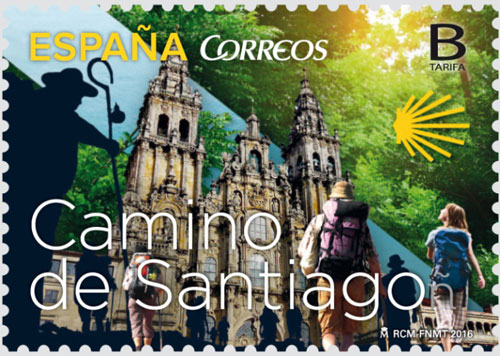
The Pilgrim's Way to Santiago itself has its own stamp, issued in 2016. It features the main façade of the Cathedral of Santiago, which welcomes pilgrims, and the traditional scallop.
'Symbols of the Camino de Santiago' Stamp Collection
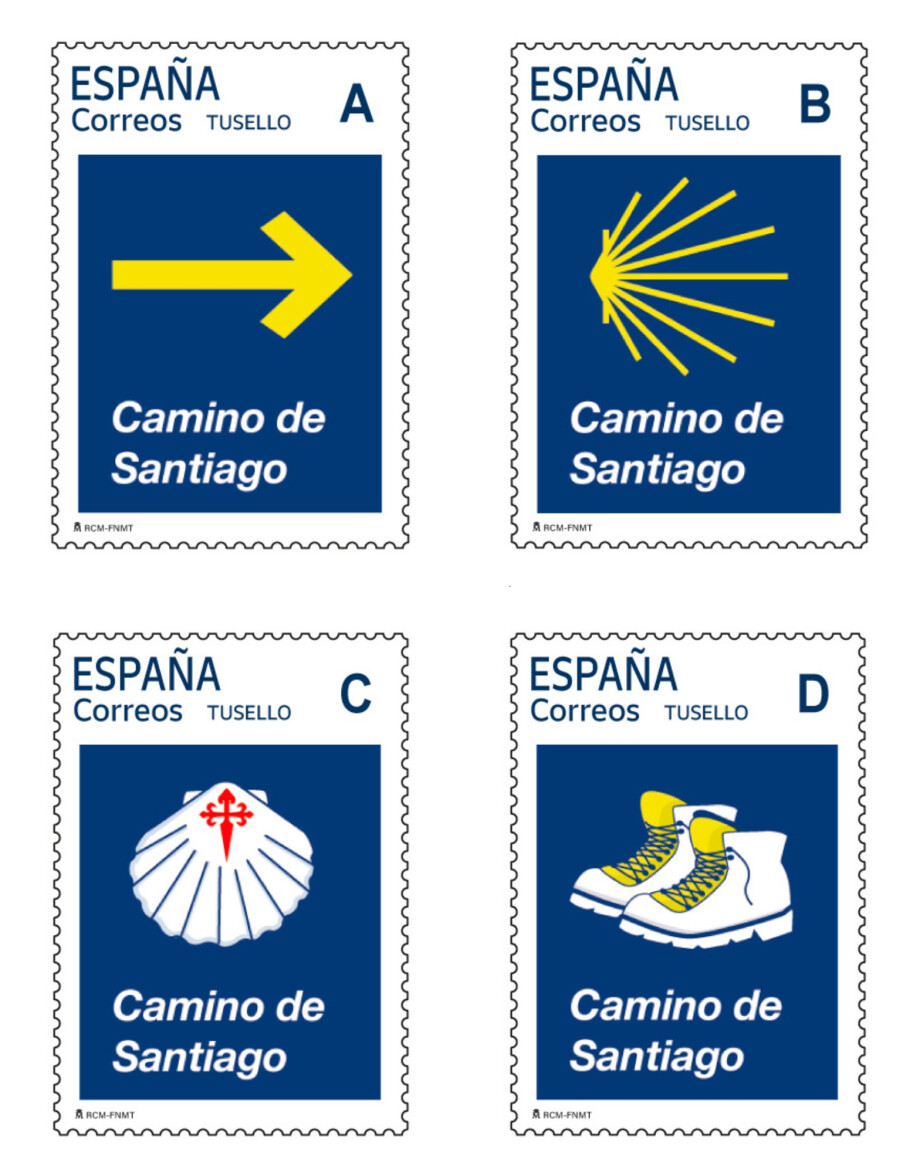
Correos is issuing a new stamp collection dedicated to the most iconic symbols of the Camino de Santiago: the yellow arrow, the yellow shell, the scallop shell with the Cross of St James, and pilgrim’s boots.
Available in various domestic and international denominations, this stamp collection is presented in packs of five stamps for each design. A unique opportunity to take home a souvenir of the Camino de Santiago or share its values with other pilgrims from all over the world.
The stamps featuring the symbols of the Camino are available at Correos Market and at the main post offices along the Camino de Santiago.

READ MORE
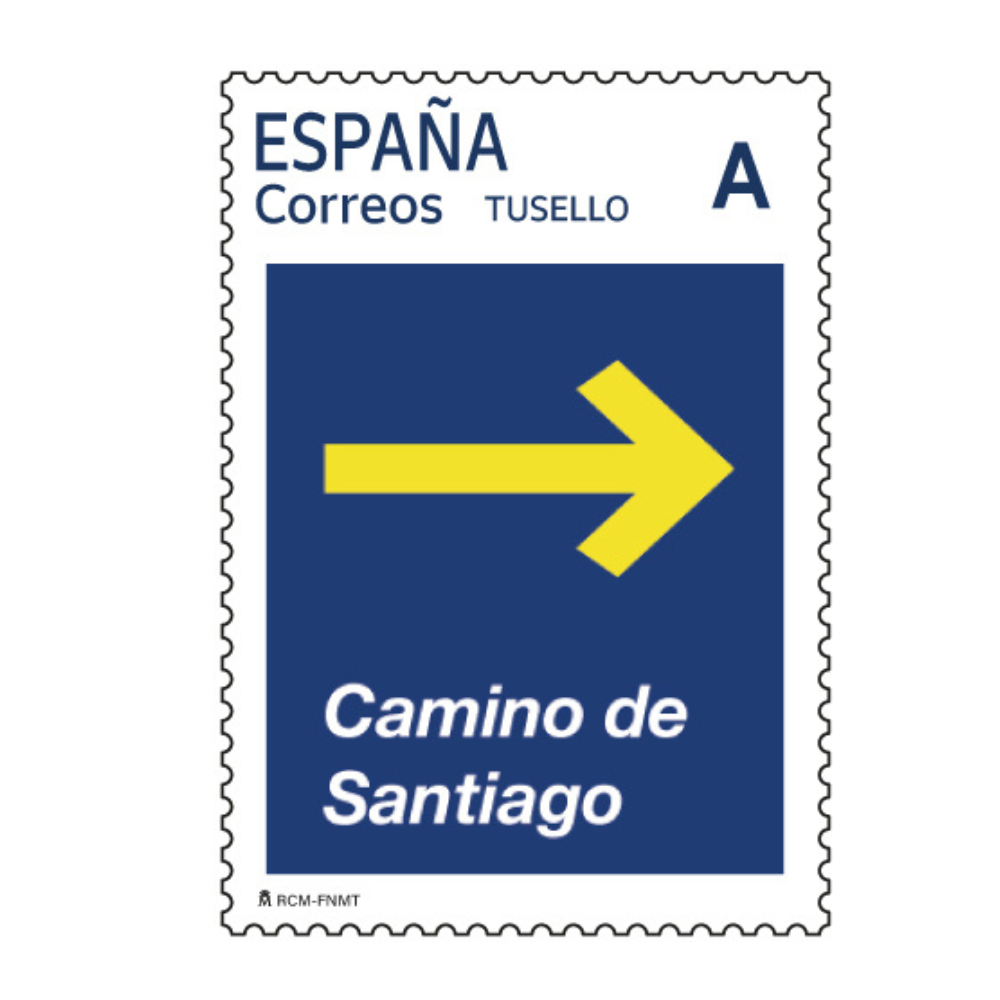
The yellow arrow is the most universal symbol of the Camino de Santiago. It guides pilgrims to Santiago de Compostela along the nearly 300 pilgrimage routes that stretch across Europe. It is now also the feature of the new stamp – A-rate (Spain) – with which Correos pays tribute to the Camino de Santiago and to pilgrims from all over the world.
Created in the 1970s by Elías Valiña, the former parish priest of O Cebreiro and a scholar of the Way, it was his idea to mark the route to provide pilgrims with a fixed itinerary. In 1987, the Council of Europe designated it a common emblem, and in 2018 the Council of St James declared it the official symbol of the Way of St James.
The yellow arrow stamp is now available at the main post offices along the Camino de Santiago and on sale at Correos Market.
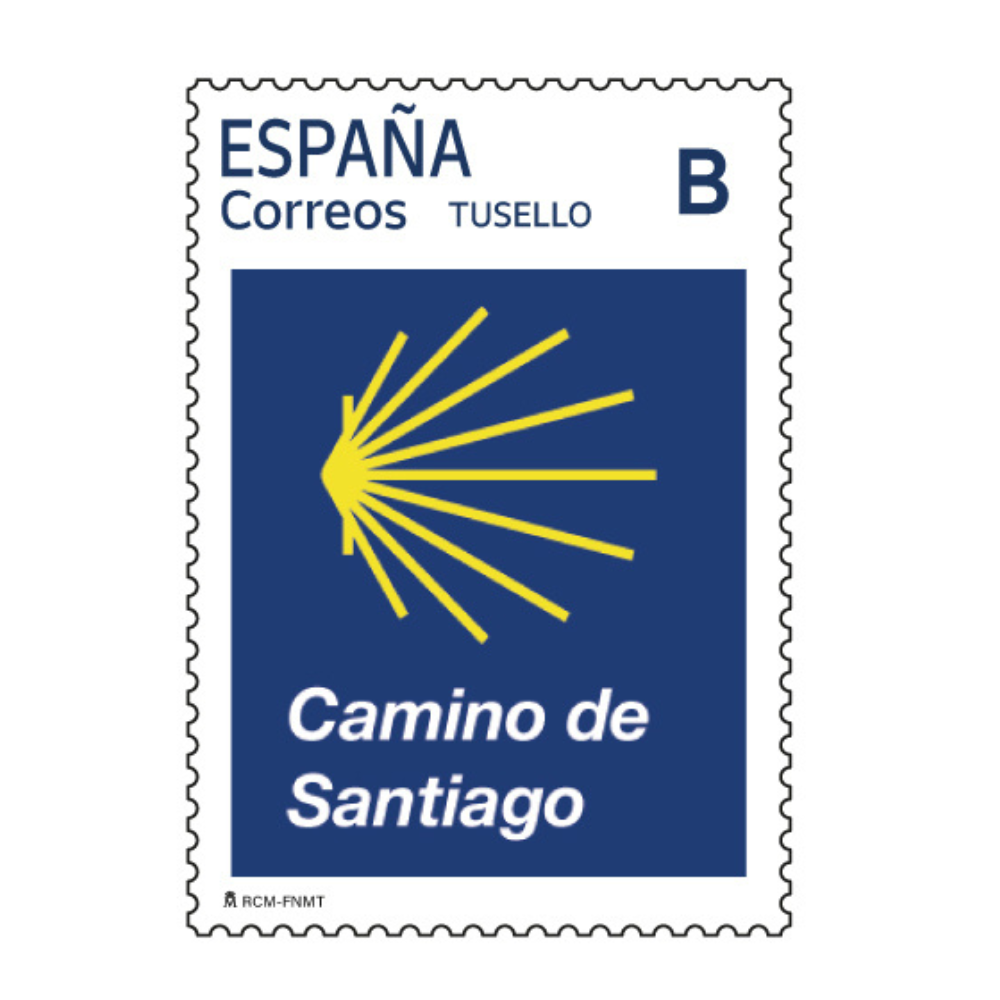
The yellow scallop shell on a blue background is another universal symbol of the Way of St James that now features on its own stamp – Tariff B (Europe). This symbol was created in the late 1980s by the artist and graphic designer Pedro García-Ramos at the request of the Council of Europe.
The ridges on the shell symbolise the routes of the various European pilgrimage routes to Santiago and their convergence at a point to the west: Santiago de Compostela.
The stamp featuring the yellow shell on a blue background is now available to buy at Correos Market, as well as at the main post offices along the Camino.
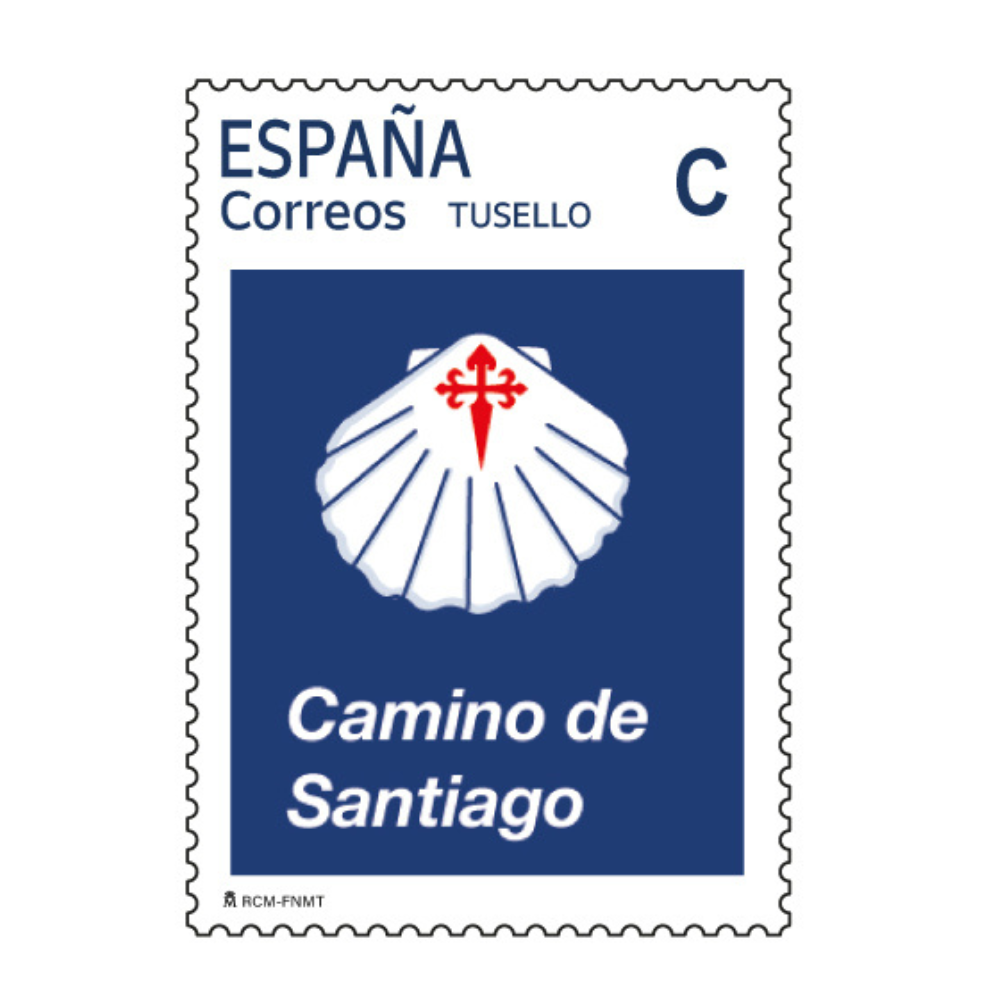
The third stamp in this collection – Tariff C (rest of Europe) – features two emblems associated with the Way of St James: the scallop shell and the Cross of St James.
The scallop shell has traditionally been the pilgrim’s symbol. Since the Middle Ages, it has symbolised arrival in Santiago and was used as proof of the journey. For its part, the Cross of St James, red in colour and shaped like a sword topped with fleurs-de-lis, is a historic emblem linked to the Order of St James. It represents values such as faith, tradition and honour.
The combination of both symbols results in a design rich in meaning, reflecting the essence of the Camino. It can also be purchased at Correos Market and at the post offices in Santiago and Fisterra.
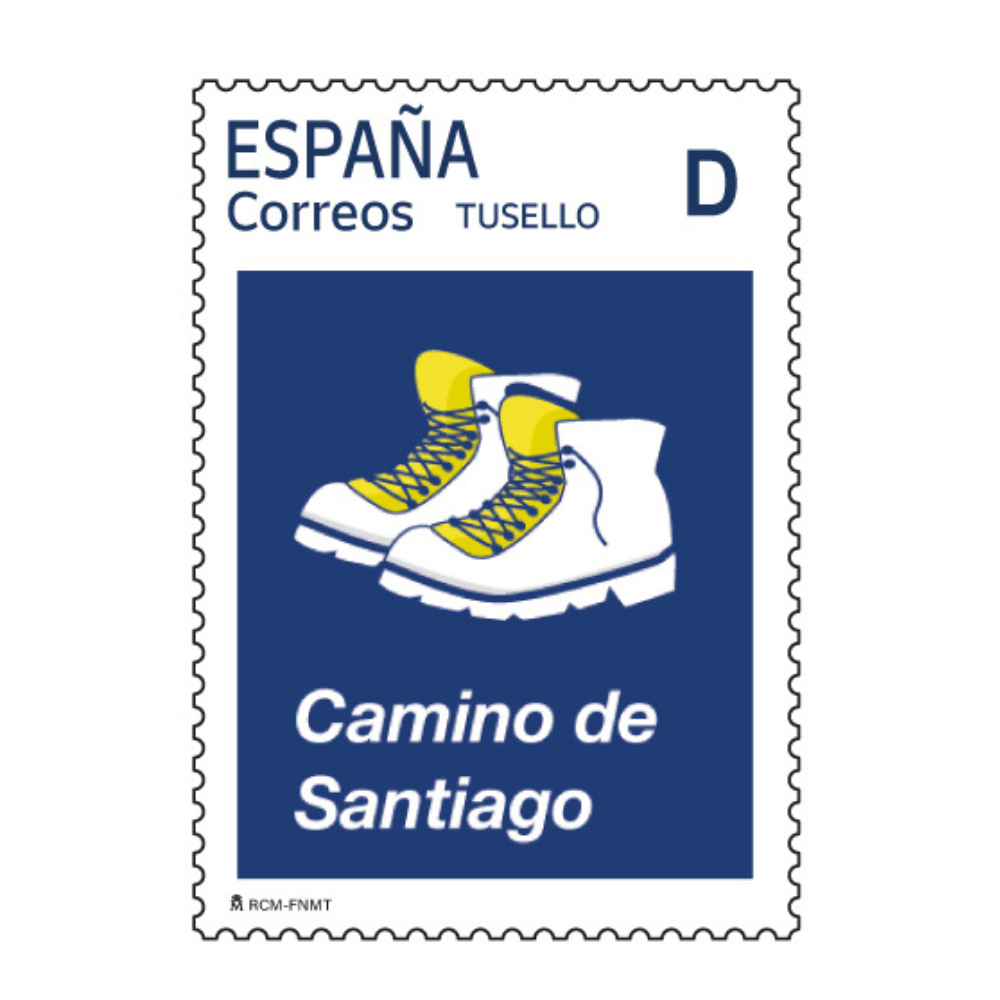
The series concludes with a fourth stamp – D-rate (Australia, Canada, USA, Japan, New Zealand and Russia) – dedicated to the only ‘unofficial’ symbol: the pilgrim’s boots. Yet no one today can think of the pilgrim without the boots that, step by step, carry them to their destination: Compostela.
The pilgrim’s boots also evoke an ancient tradition whereby pilgrims would burn the clothes they had worn on the pilgrimage and leave their boots behind upon reaching their destination.
The stamp is available at Correos Market and at the post offices in Santiago and Fisterra.
Sello 'Camino de Santiago. Apostle's celebration'
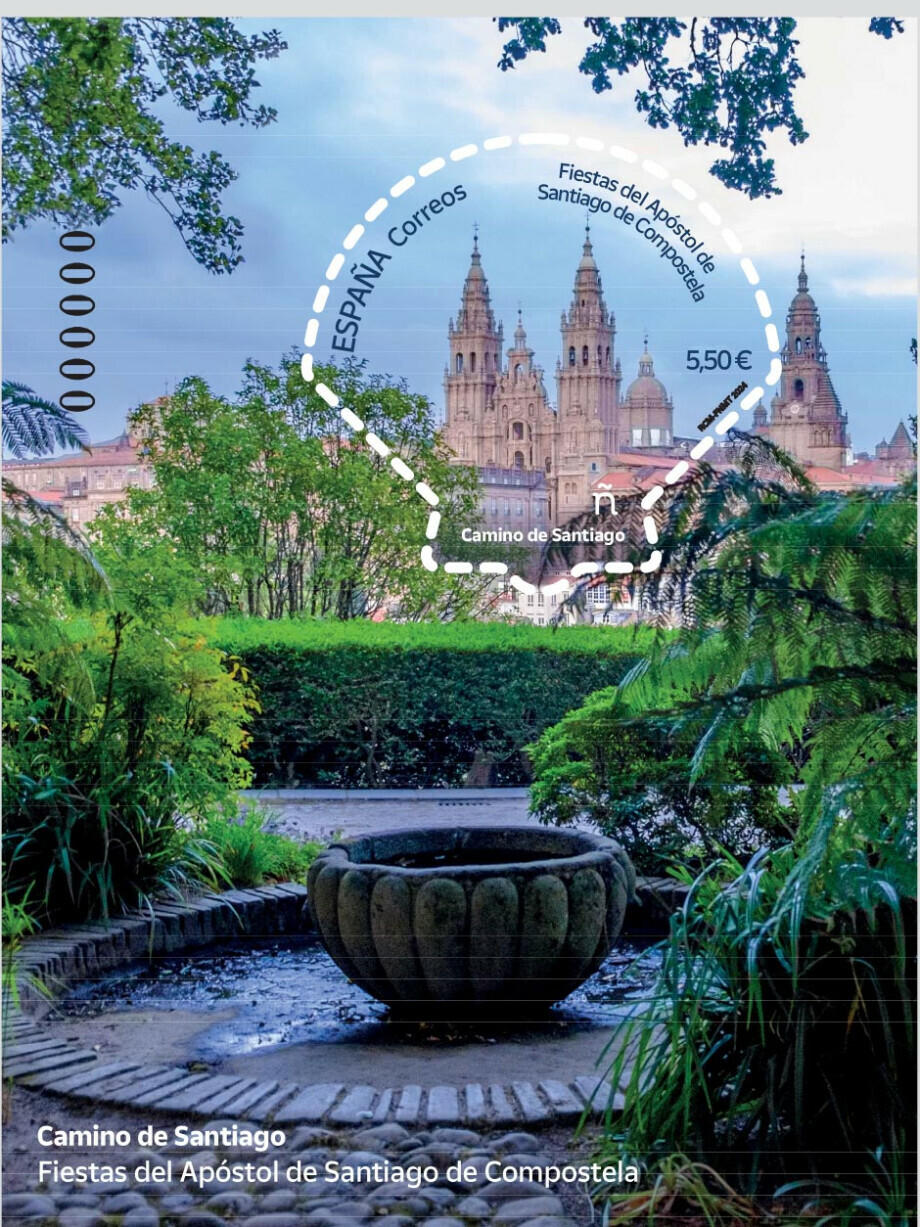
Correos joins the July 25th celebration, Apostle St. James's day, with a brand new stamp dedicated do the final Camino destination: Santiago de Compostela.
With a special design shaped like the scallop shell, this stamp has an image of one of the more authentic views of the Cathedral, consisting of the front of the Cathedral from the Parque de la Alameda, a view that thousands of pilgrims enjoy every day.

Caminos of the North stamps
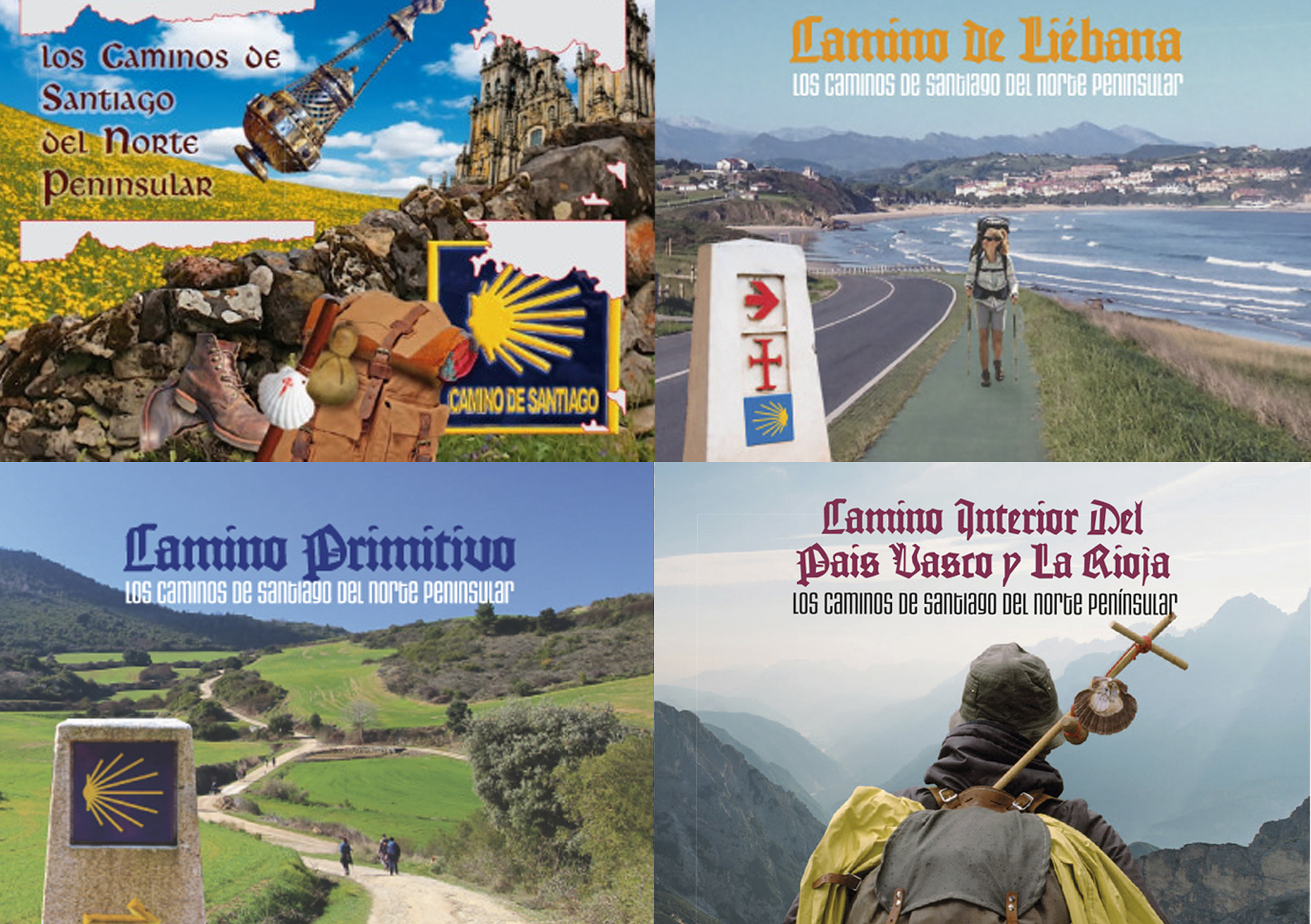
The most recent stamps dedicated to the Camino de Santiago are those belonging to the series on The Pilgrims' Roads to Santiago in the North of Spain, an original philatelic tribute with the most representative places of each of these routes that were declared World Heritage by UNESCO in 2015.
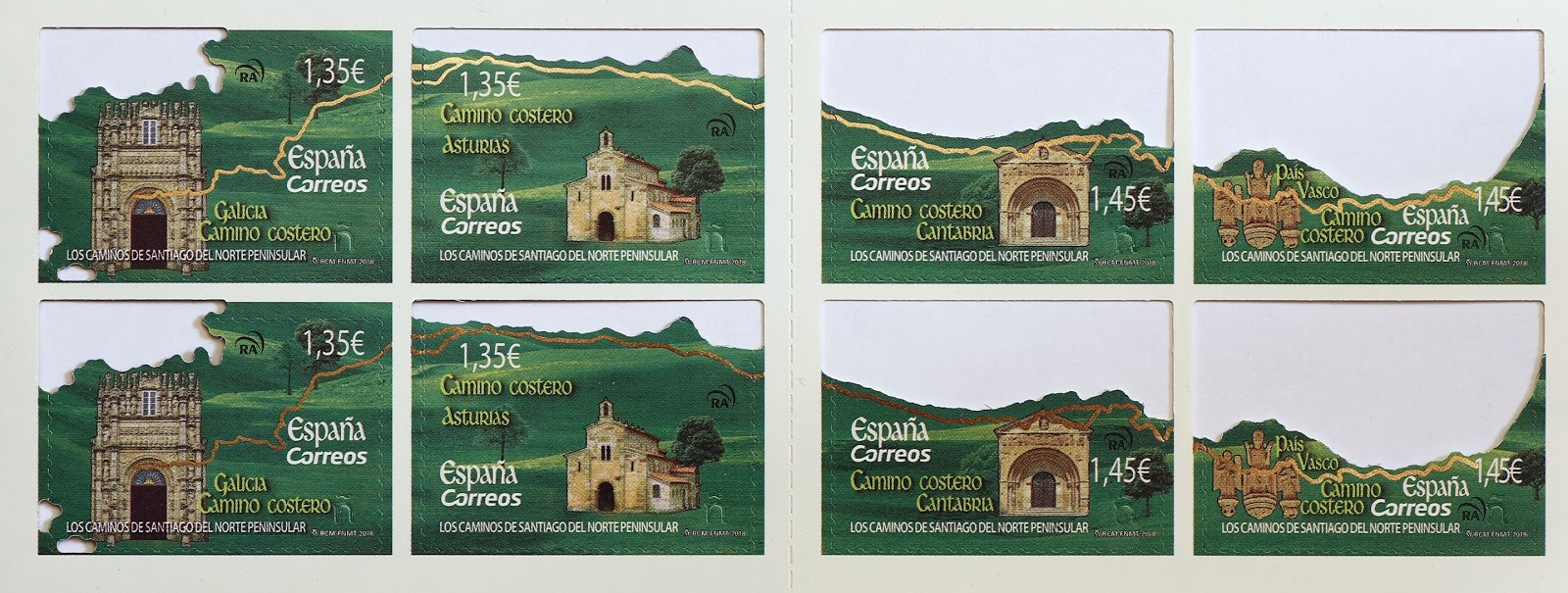
READ MOREThe series was inaugurated with the Camino Costero through a die-cut card with the profile of the northern coast of the Peninsula, which includes 8 stamps with highlights such as the monastery of Zenarruza, the Collegiate Church of Santillana del Mar, the Conventín de Valdediós or the front of the Hostal de los Reyes Católicos de Santiago.
The second booklet is dedicated to the Camino Primitivo, the Route that stretches from Oviedo to Compostela. The stamps feature motifs typical of this route, such as the figure of King Alfonso II, the precursor of this route, the cathedrals of Oviedo and Lugo and the cruceiro de Melide.
.jpg)
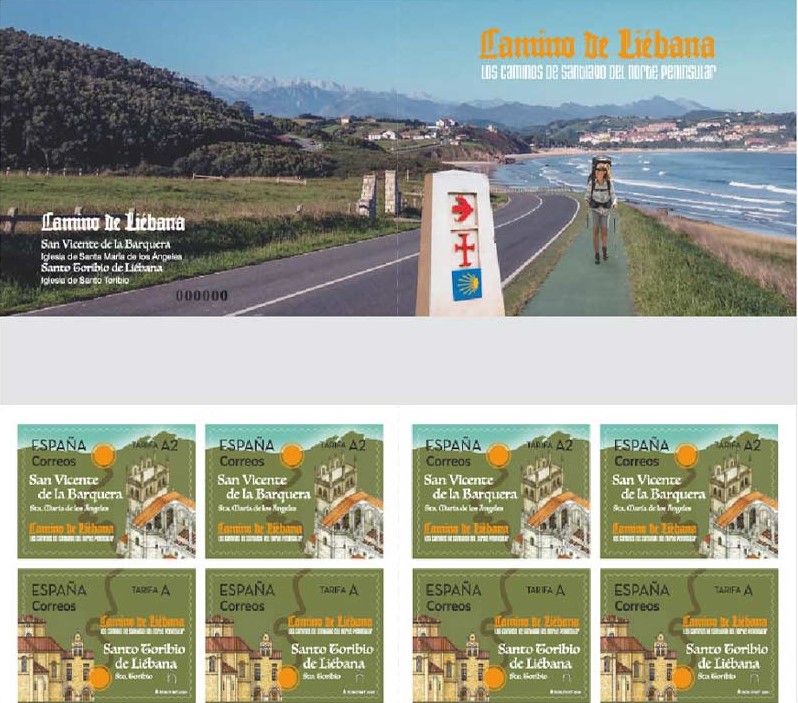
The third is dedicated to the Camino de Liébana, a route that runs through Cantabria. The philatelic booklet dedicated to the Camino Lebaniego is also made up of eight stamps, featuring two jewels of the Route: the church of Santa María de los Ángeles, in San Vicente de la Barquera; and the church of Santo Toribio de Liébana. This card can be purchased online at Correos Market.
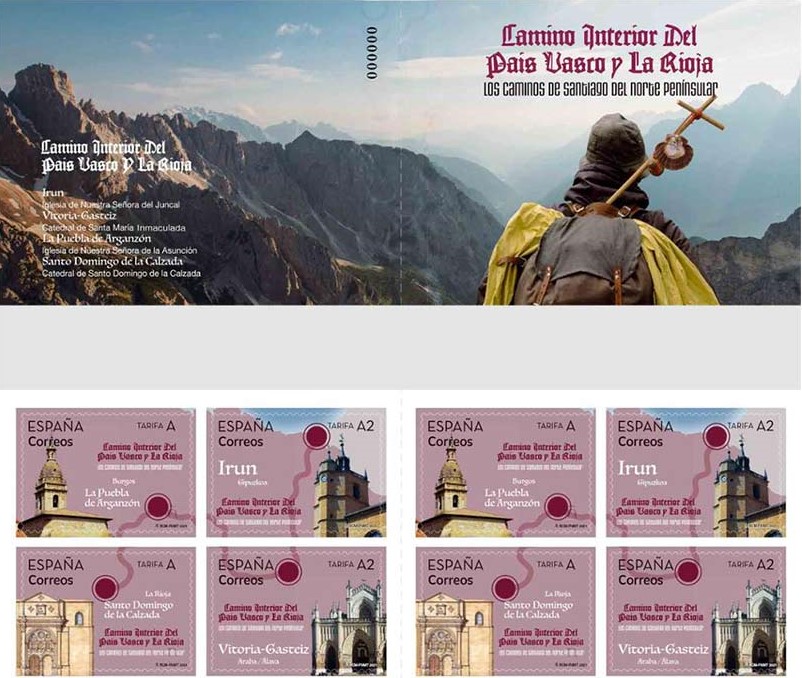
The series closes with a fourth philatelic booklet dedicated to the Camino interior del País Vasco y La Rioja and can be purchased at Correos Market . On this occasion the protagonists of the stamps are the Church of Nuestra Señora de La Asunción in La Puebla de Arganzón, the Church of El Juncal in Irún, the Cathedral of Santo Domingo de la Calzada and the New Cathedral in Vitoria.
Sellos Xacobeo 2021-2022
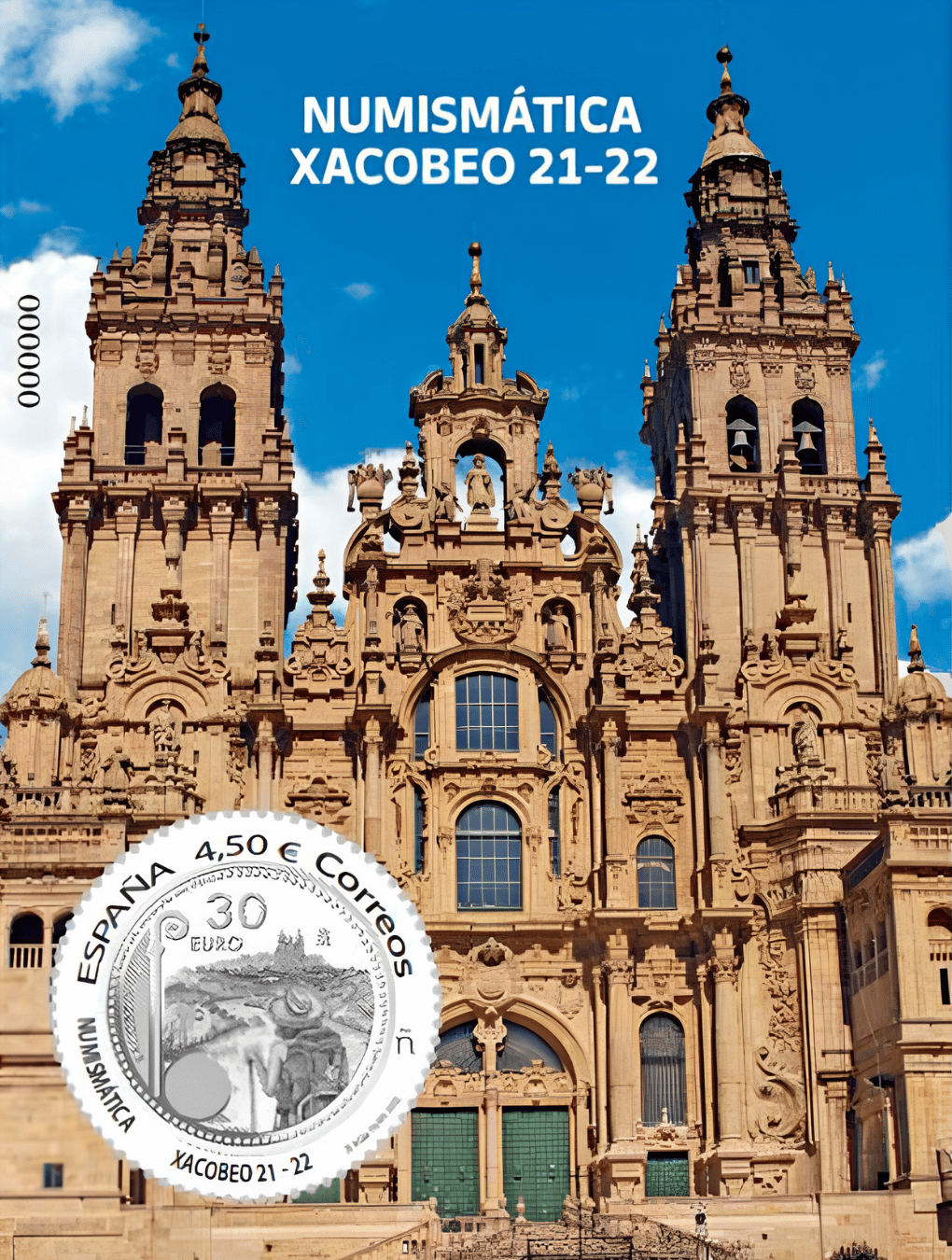
On the occasion of Xacobeo 2021-2022, Correos has made a double issue.
In 2021 it launched a commemorative stamp featuring Floreano, one of the most beloved characters of the Galician press. Created by the cartoonist Gogue, Floreano has jumped from the pages of Faro de Vigo to become a pilgrim, with his cape, staff and pumpkin in the stamp dedicated to Xacobeo 2021.
In this 2022, the motif chosen for the stamp dedicated to the Xacobeo is the €30 coin that has on its reverse an allegorical image of the Camino de Santiago, with a pilgrim and the Cathedral of Santiago de Compostela.
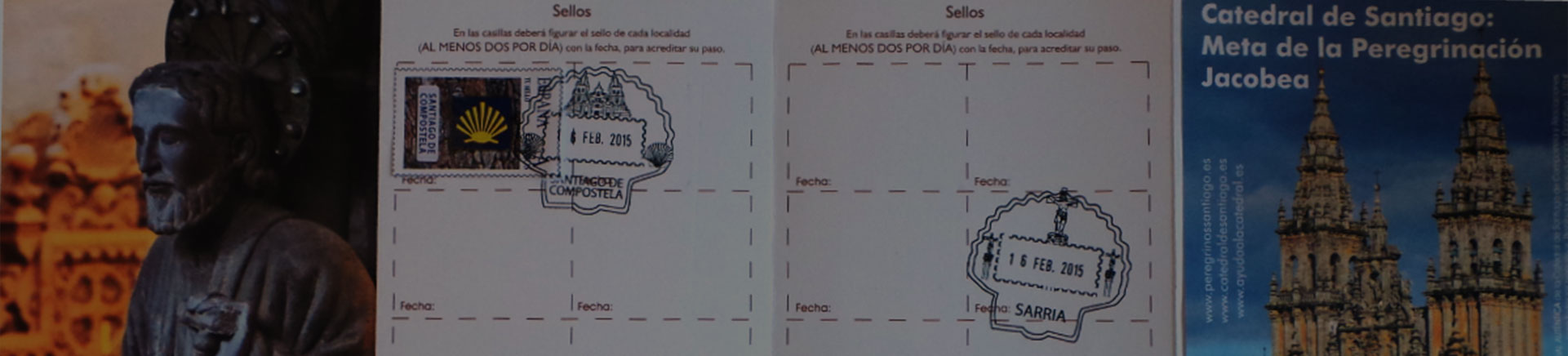
Camino del Norte Philatelic Credential
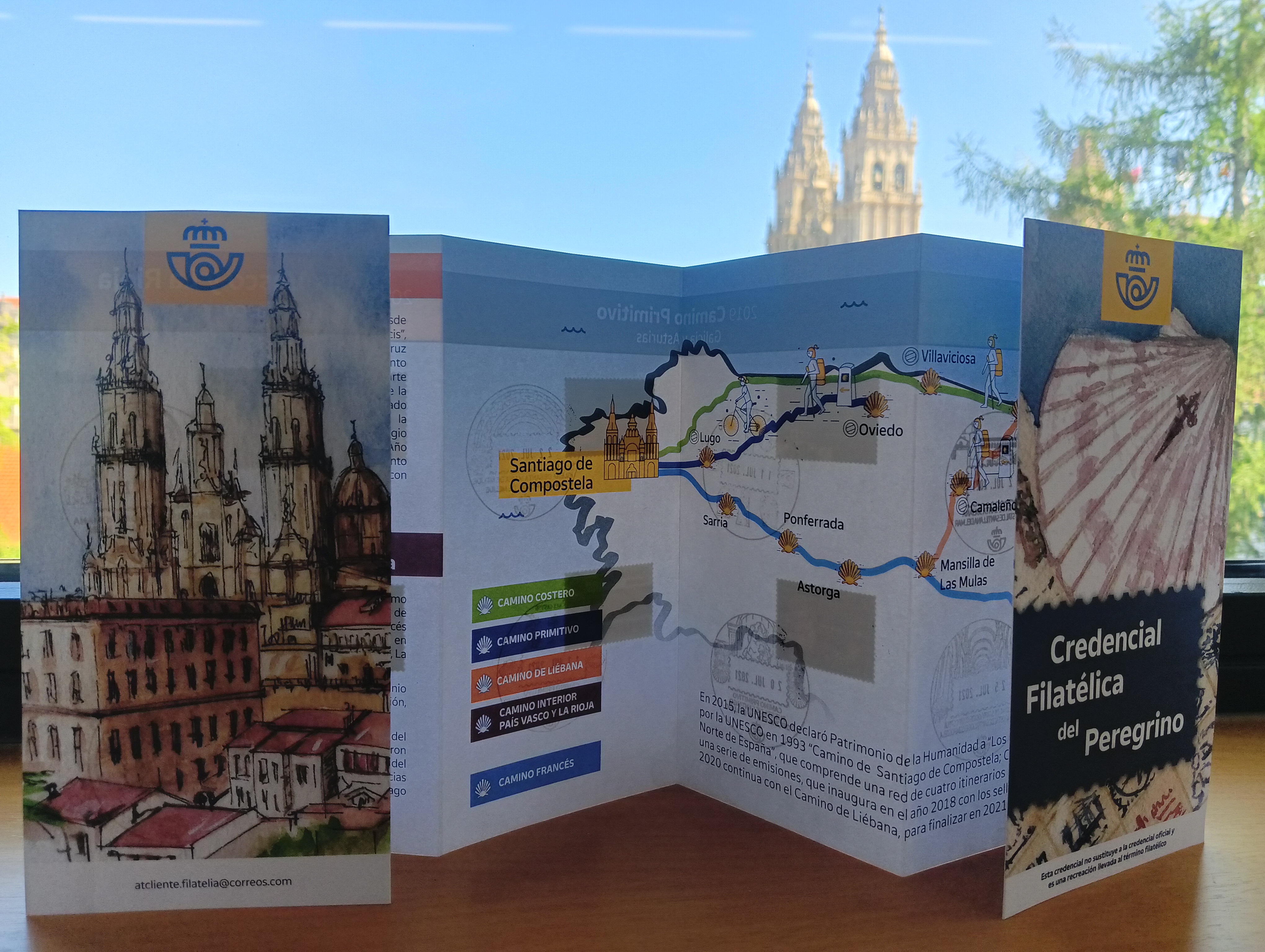
On the occasion of Xacobeo 2021-2022, the Philatelic Credential arrives to the Camino del Norte, covering the four most singular Routes of this Way: Costero, Primitivo, Liébana and Interior del País Vasco y La Rioja.
The Philatelic Credential of the Caminos del Norte includes a total of 14 stamps and postmarks, witnesses of the different stages of these four Jacobean Routes.
This Philatelic Credential pays tribute to Los Caminos del Norte de España, a network of 1,500 Jacobean kilometres that were recognised in 2015 by UNESCO as a World Heritage Site.
'El Camino de Santiago. Sello a sello'
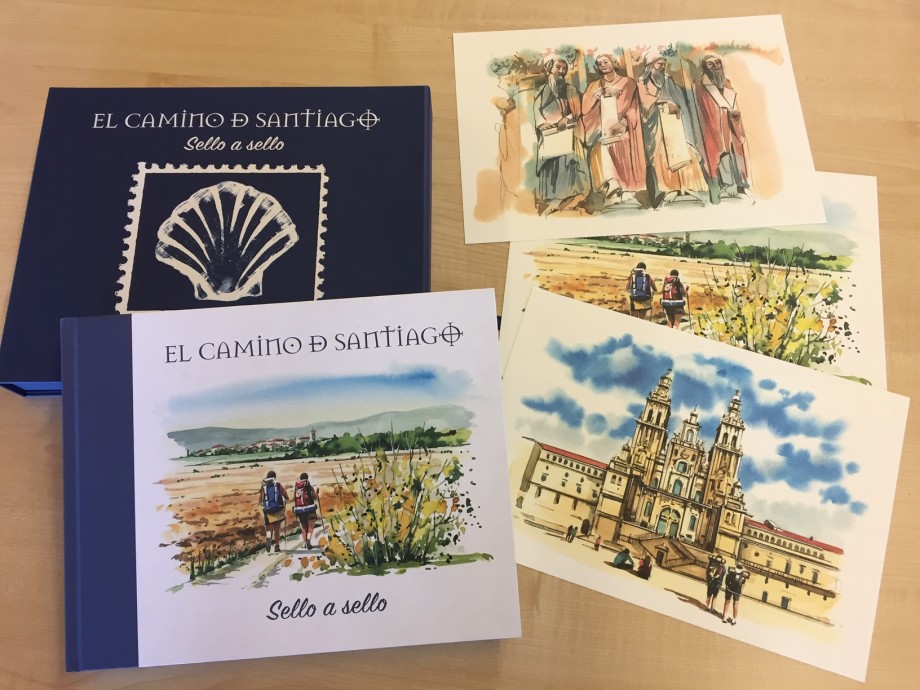
On the occasion of the Compostela Holy Year, Correos has launched the philatelic book 'El Camino de Santiago. Sello a sello'.
This book offers a journey through the Camino de Santiago through the texts of 13 authors and the beautiful illustrations of Alicia Aradilla. At the end of the book, lovers of the Camino will find a very special compilation: the reproduction of all the Jacobean stamps issued to date, as well as the commemorative stamp of Xacobeo 2021 and the 2018 Artist's Proof of the Cathedral of Santiago with reproduction of the stamp in silver.
The philatelic book of the Way of St. James comes with three free plates by Alicia Aradilla, with an image of the Cathedral of Santiago, another one of a detail of the Portico de la Gloria and another one with a landscape of the Camino de Santiago.
Camino tourists postmarks
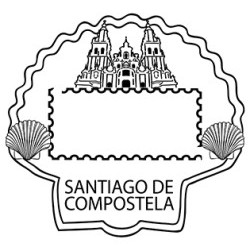
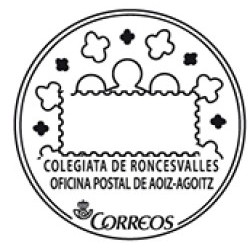
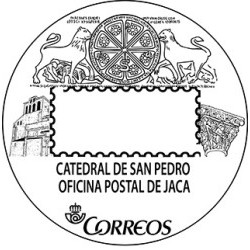
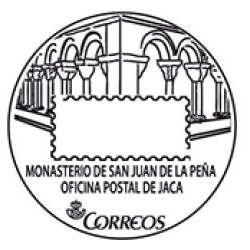
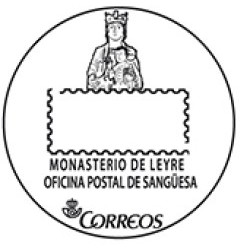
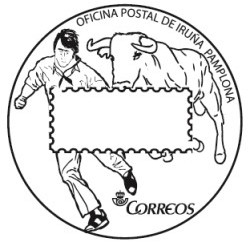
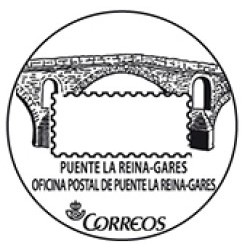
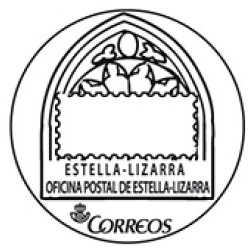
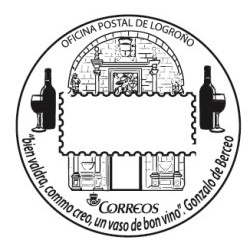
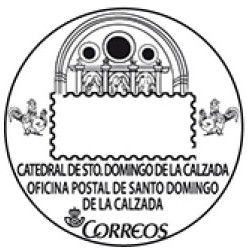
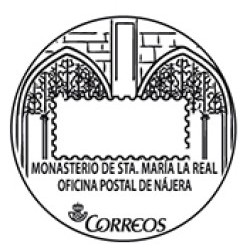
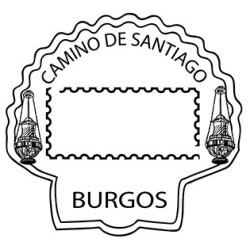
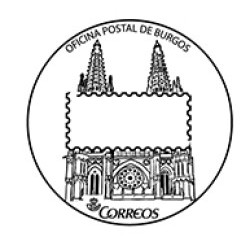
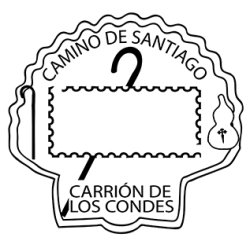
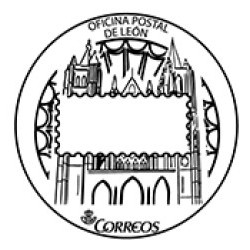
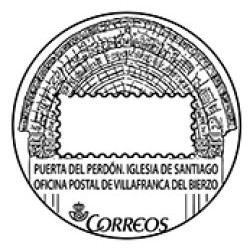
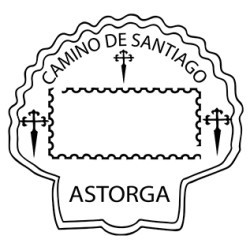
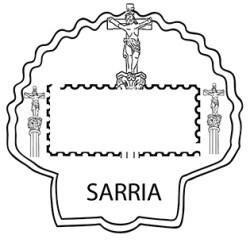
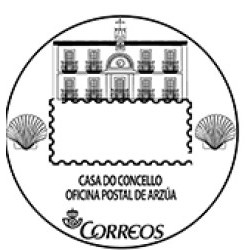
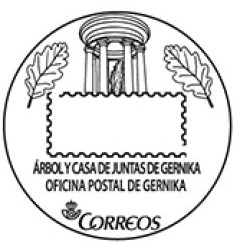
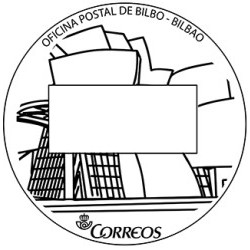
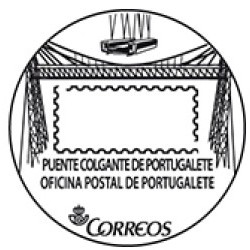
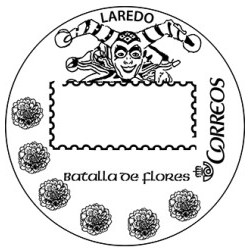
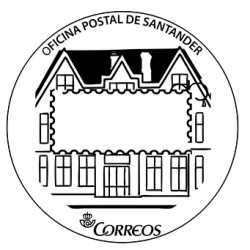
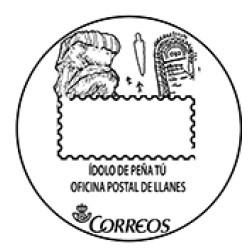
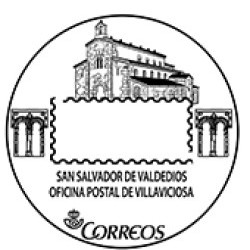
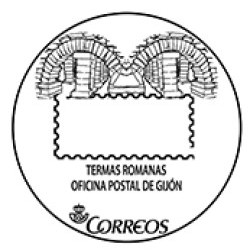
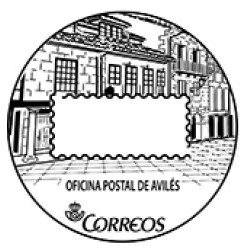
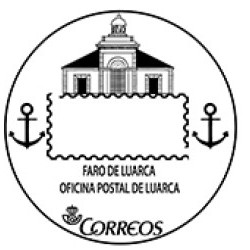
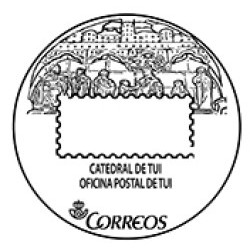
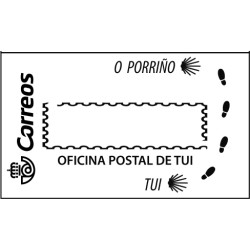
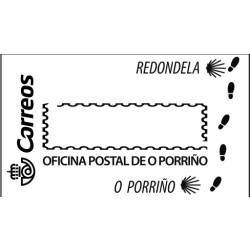
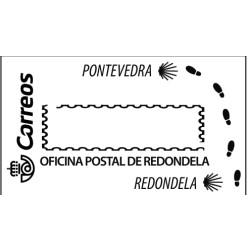
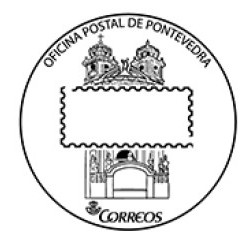
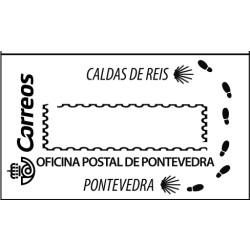
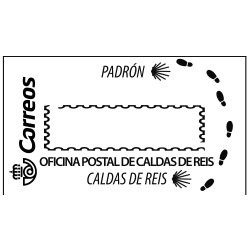
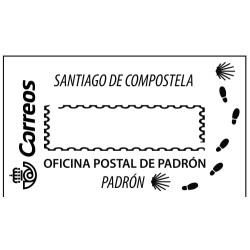
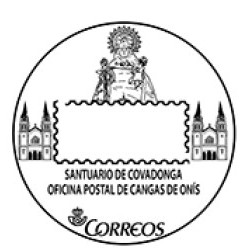
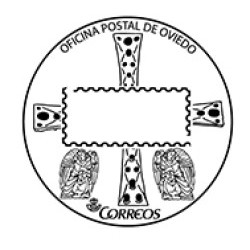
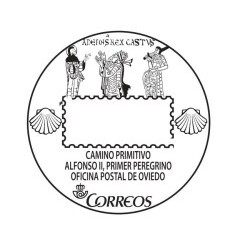
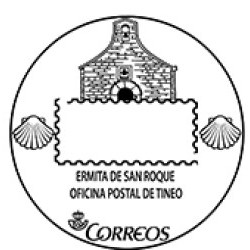
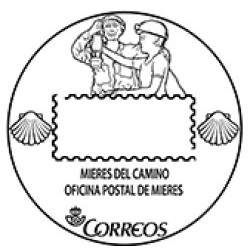
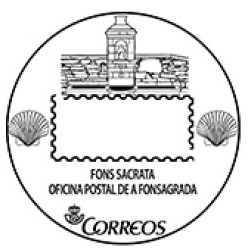
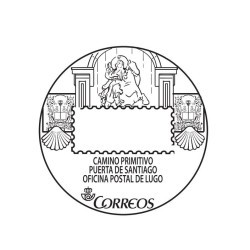
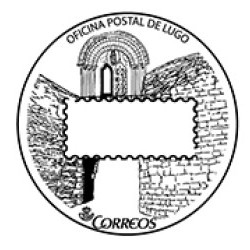
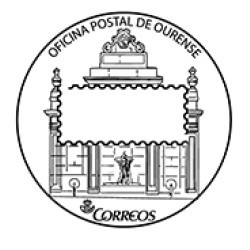
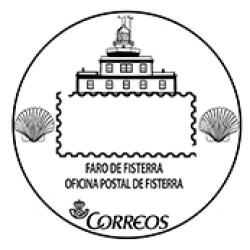
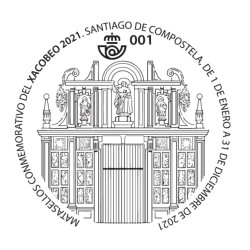
In many of the 150 post offices that Correos has along the different routes of the Camino de Santiago we have tourist postmarks that represent the great architectural, artistic and natural wealth of these places.
Here we leave you a gallery with the main tourist postmarks of the Camino that you can find in our offices: