
Tips to do the Camino
Share


Beautiful landscapes, an easy-going route, and the Atlantic Ocean as your constant companion. These are just a few of the great attractions offered by the Portuguese Coastal Way, the pilgrimage route that runs along the Atlantic coast and passes through such unique towns as Viana do Castelo, A Guarda, and Baiona.
A route of about 270 kilometers that runs right along the coast and is gaining more and more followers every day: this past October, it was the most-traveled Camino de Santiago, second only to the Camino Francés and the Central Portuguese Way (which runs through the interior).
Today we’ll tell you the story of this route, its highlights, the must-see spots along the way, and all the information you need to enjoy a unique experience.
In the “The Caminos” section of this website, you’ll find the Portuguese Coastal Way, including a detailed stage-by-stage itinerary starting in Porto, maps of the route, difficulty levels, and information on accommodations available along each section. You’ll also find the services that Correos offers along the Portuguese Coastal Way, such as Paq Mochila—our daily luggage and backpack transport service—and Paq Mochila Directo, the service that ships luggage directly to Santiago de Compostela from Porto.
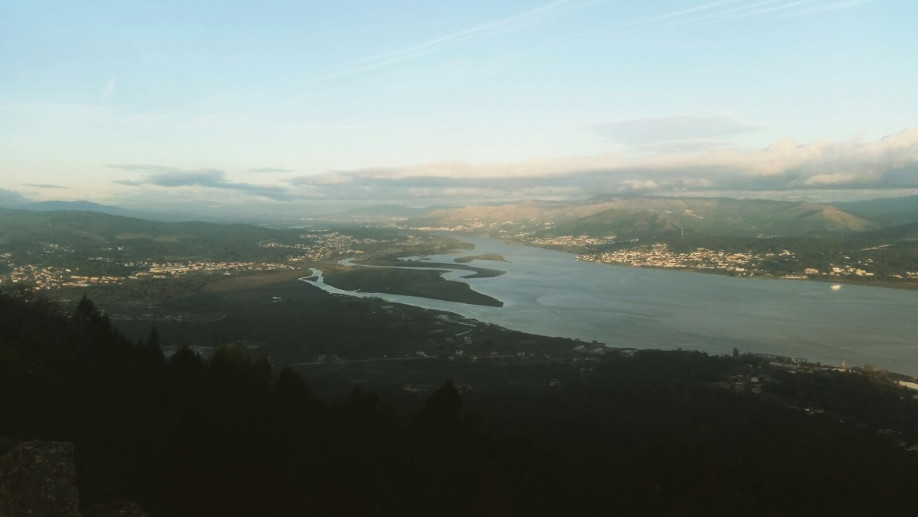
The mouth of the Miño River as seen from Mount Santa Tegra in A Guarda
Beautiful views along the Atlantic coast
The Portuguese Coastal Way, like the Portuguese inland route, is a historic route that was already being used by pilgrims in the 12th century.
For centuries, St. James was the patron saint of Portugal, and during the Middle Ages, numerous churches were dedicated to him in the coastal towns through which this Way of St. James passes.
Its heyday, however, began in the 16th century, and some of its sections were walked by illustrious pilgrims such as King Manuel I of Portugal on his return from the Apostle’s tomb (1501) and Prince Cosimo de’ Medici in 1669.
The Xacobeo 93 celebration gave this route a new boost, kicking off the signage project. By 2010, it had been officially recognized by the Xunta de Galicia, which included it as an official Way to Santiago de Compostela.
The starting point of this Camino de Santiago is Porto, Portugal’s second-largest city, and it passes through coastal towns of great beauty. So, in addition to experiencing the already enriching journey of the Camino, you’ll be able to enjoy unique landscapes and discover beautiful towns.
If you follow our advice, don’t miss the Porto Riverfront and its views from Gaia during your journey through Portugal; take in the view of Viana do Castelo from the Sanctuary of Santa Luzia—located 230 meters above sea level—and enjoy the historic center of Caminha.
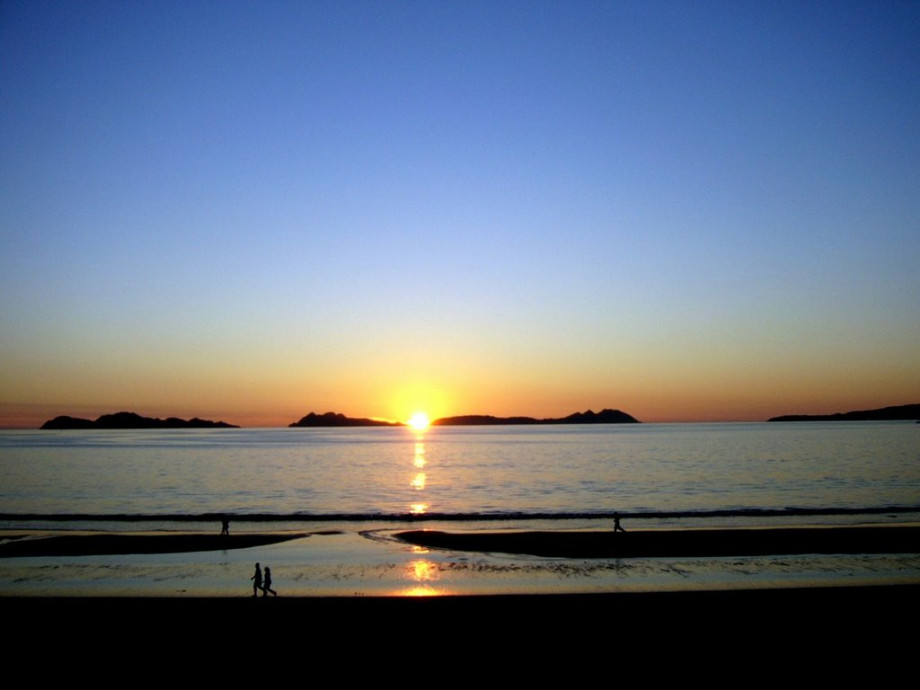
View of the As Illas Atlánticas Natural Park
Once in Galicia, the Portuguese Coastal Way also offers countless attractions. The route on Spanish soil begins in A Guarda, which offers unparalleled views of the mouth of the Miño River from the hill of Santa Tegra. The sunsets from here are spectacular. And you can take advantage of the climb to discover its famous Celtic fort, its petroglyphs, and its 20th-century chapel.
This first Galician stage ends in Oia, where you can’t miss one of the route’s gems: the 12th-century Cistercian monastery of Santa María de Oia. The journey along the Galician coast offers unparalleled views, such as those of the cliffs at Cabo Silleiro, the Parador de Baiona, and the Illas Atlánticas as you enter Vigo. There is an alternative route between Oia and Vigo that passes through Nigrán, where its long sandy beach is the undisputed highlight.
In Redondela, the Portuguese Coastal Way joins the Portuguese Inland Way (which runs through Ponte da Lima, Valença do Miño, Tui, and O Porriño) all the way to Santiago. After enjoying the Island of San Simón and its beautiful views of the Vigo estuary, we’ll leave the coastline behind to enjoy other equally unique landscapes, such as those offered by Pontesampaio, Pontevedra, Caldas de Reis, and Padrón.
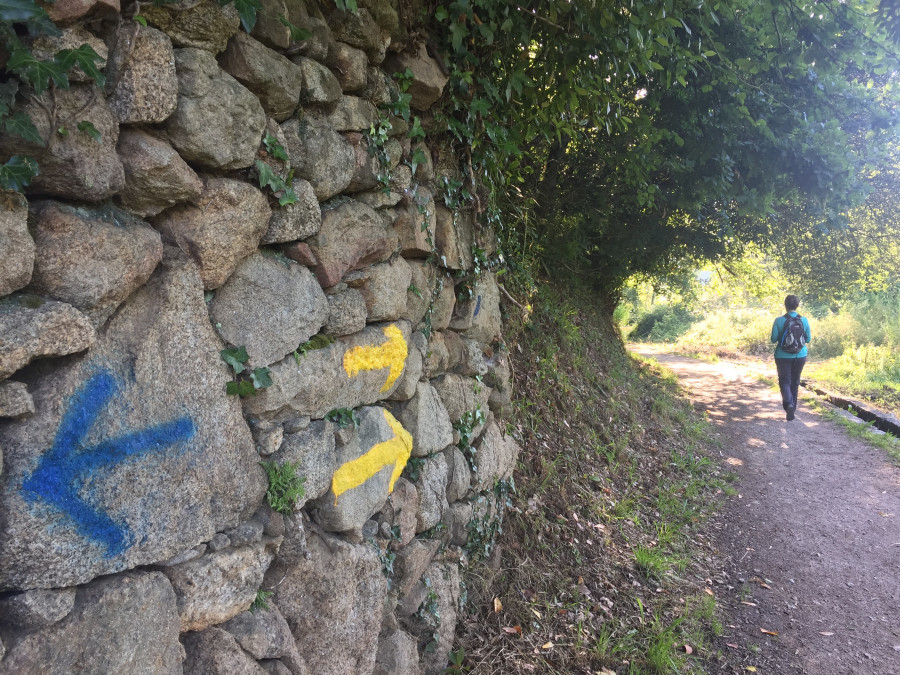
Smooth route, also suitable for cyclists
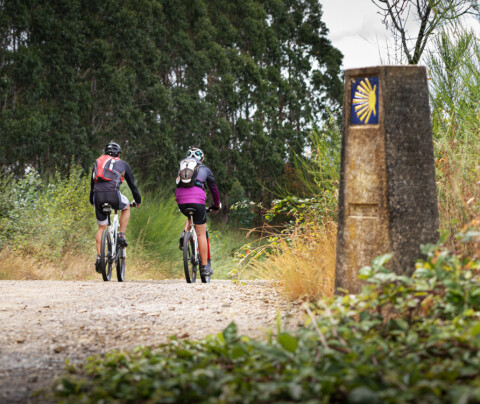
In addition to its beautiful landscapes, the Portuguese Coastal Way of St. James is characterized by a gentle route—quite accessible to any pilgrim—and good signage. With hardly any elevation changes and a fairly even surface, the route is also well-suited for cyclists. Cyclists can even ride some sections along bike paths, such as between A Guarda and Baiona.
The Portuguese Coastal Way offers good services, and you’ll have no trouble finding accommodations. We remind you that our website lists them in detail by stage and by type of establishment.
If all of this has convinced you to take this route, remember that the classic starting point is Porto. This Portuguese city has numerous flight connections, as Sá Carneiro is the largest airport in the northwestern part of the Iberian Peninsula. If you’d like to travel by train, you’ll need to depart from either Vigo or Lisbon. And by bus, in addition to Galicia, there’s a 9-hour connection from Madrid. Here are more directions on how to get to Porto to begin the Portuguese Coastal Way.
If you’d like to start in Galicia, A Guarda is your destination. The nearest airport is Peinador in Vigo, which is just 60 km away and offers connections to major Spanish cities and international routes. Vigo also has daily train and bus connections to A Guarda.
Correos is with you on your Portuguese Coastal Way
El Camino con Correos services are also available on this route.
Our daily backpack transport service is available on all stages of the Portuguese Coastal Way from Porto to Santiago de Compostela, including the Spiritual Route if the pilgrim so desires.
Likewise, our bicycle transport service is available on the Portuguese Way within Spanish territory, making it ideal for starting the Camino in A Guarda. If you’ve already completed the Camino, you can book the service online and have your bike shipped back home.
And if you forget something at a hostel or want to send your belongings back home, you can count on our Paq Peregrino service within Spain or the Paq Mochila Directo service for shipments from Porto.
Have a great Camino!
Your email address will not be published.
Mandatory fields are marked with *