

Places of the Camino
Share


The Camino Portugués is one of the most popular pilgrimage routes amongst pilgrims. In 2025, the Portuguese Way attracted a total of 190,335 pilgrims across the Camino Portugués Central and the Camino Portugués de la costa. And the figure is growing year on year.
In recent years, this route – with its beautiful scenery, low to medium difficulty and excellent signposting – has won over numerous walkers and cycle pilgrims. This popularity has led it to become the second most popular route, second only to the Camino Francés, the quintessential route of the Camino de Santiago.
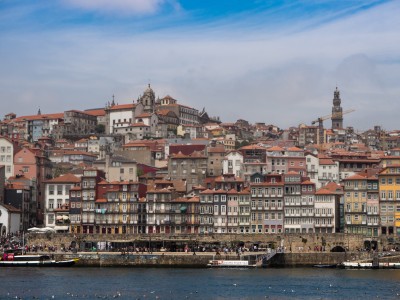
Porto (Porto in Portuguese), with a population of 51,572, was the most popular starting point for pilgrims, second only to Sarria and Saint-Jean-Pied-de-Port, both on the Camino Francés.
From Porto, pilgrims can follow two routes: the Camino Portugués central, which passes through inland towns such as Braga and Ponte de Lima before entering Spain at Tui.
And the Camino Portugués de la costa, which, as its name suggests, runs along the coast, following pedestrian paths through towns such as Poboa do Varzim, Viana do Castelo, and Caminha until it crosses the border at A Guarda.
Pilgrims can count on the support of Correos, which offers a daily luggage transfer service from Porto and a luggage shipping service from Porto to Santiago, available on both the Camino Portugués central and the Camino Portugués de la costa. This way, you can enjoy your Camino Portugués without having to carry your luggage.
If you, too, have chosen Porto as the starting point for your Camino Portugués, you should know that it is Portugal’s second-largest city and has many attractions. Plus, traveling to Porto is very easy, as it has excellent transportation links. Here are the main ones.
How to get to Porto by plane
Flying to Porto is easy, comfortable, and inexpensive. Porto’s Francisco Sa Carneiro Airport (OPO) is located just over 10 kilometers north of the city and offers domestic flights, mainly from Lisbon, the Algarve, and Madeira, as well as international flights to major cities in Spain, Europe, and the Americas.
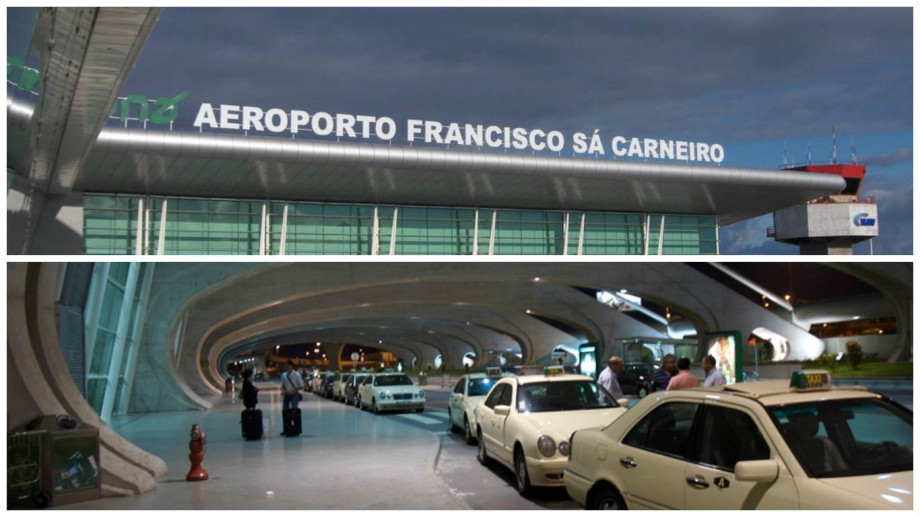
It is a modern airport with the capacity to handle up to 10 million passengers. In 2007, it received the award for Best Airport in Europe, and in 2010, it ranked second in this category.
From Spain, you can fly to Porto from Madrid, Barcelona, Girona, Seville, and Tenerife. Many of these flights are operated by low-cost carriers and offer affordable fares.
From Europe, Porto Airport connects to countries such as France, Germany, Italy, the United Kingdom, Ireland, Belgium, the Netherlands, Poland, and Austria. International connections are rounded out by flights to Newark (U.S.) and Toronto (Canada).
Once you’ve landed, how do you get from Porto Airport to the city? It’s very easy, and there are several options. The most convenient and affordable way to travel from the airport to Porto is to take the purple metro line, which runs every 30 minutes. In about half an hour, you’ll be in the city center, and the fare is around €2.
You can also reach downtown Porto from the airport by city bus. You can take bus lines 601 and 602 (which run from Sà Carneiro to Cordoaria) and line 604 (to Hospital de São João). The fare is about €2, but we recommend taking the metro, as the bus ride takes longer.
The Porto airport is well-equipped and offers countless services, so you can also take a taxi, use a ride-hailing service like Uber, or book a private transfer.
How to get to Porto by bus
Public transportation also offers good connections. It is possible to reach Porto by bus. Alsa and Flixbus are the two bus companies that offer regular service to the Portuguese city.
From Madrid, the trip takes about 9 hours, with stops in Ávila and Salamanca. It’s also possible to travel to Porto from the south, departing from Seville with stops in Huelva, as well as Lisbon and other Portuguese cities.
It’s also very convenient to get to Porto from Lisbon, with 20 daily connections between 7:00 a.m. and midnight. Route 50 operated by Rede Expressos is the fastest, with a travel time of 3.5 hours.
The most convenient and time-efficient starting point for traveling to Porto is Galicia. Alsa offers daily connections from A Coruña (5 hours), Santiago de Compostela (4 hours), Pontevedra, and Vigo.
How to get to Porto by train
Train connections to Porto aren't the best. If you're in Galicia, you can easily get there by train from Vigo. There's a regional train that runs twice a day between Vigo and the Porto Campanha station. The trip takes about two hours.
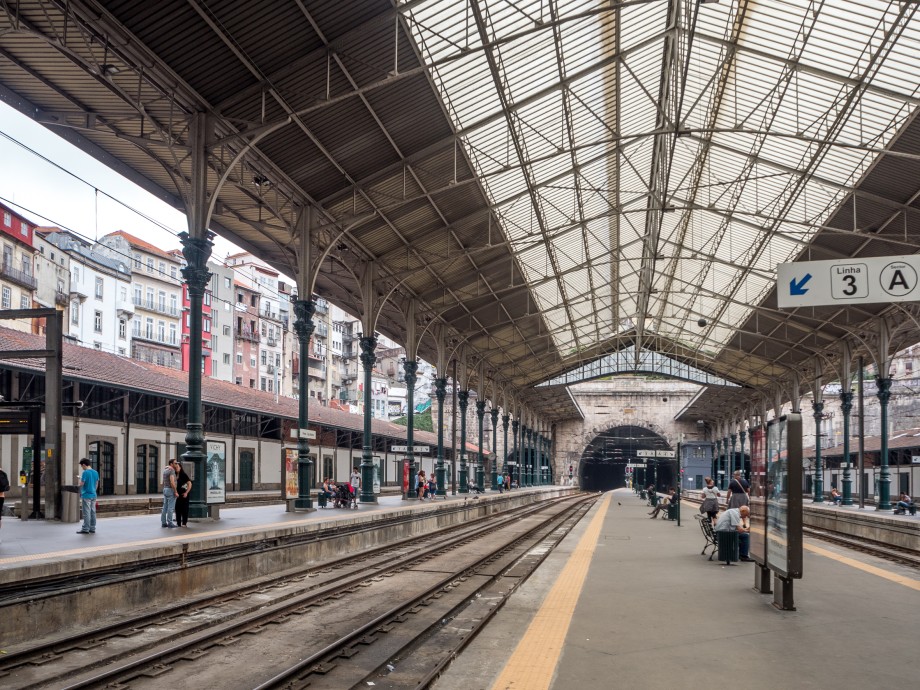
From other Spanish cities, such as Barcelona or Madrid, the best option is to travel to Lisbon. From there, you can take a train to Porto. The most economical option is the Intercidades train, which takes about 3 hours. The Alfa Pendular cuts the travel time by half an hour, although the fare is around 40 euros.
How to get to Porto by car
A private car is another option for getting to Porto, although from certain parts of the Iberian Peninsula, the trip can be a bit of a slog.

From Madrid, it takes just under 6 hours via the A-25. From Barcelona, the trip takes about 11 hours. From the south, the easiest route is to head north through Portugal on the A2 to Lisbon and then take the A1 from Lisbon.
Galicia is once again one of the closest destinations: it’s about a 2-hour drive from Santiago de Compostela, and just over an hour from Vigo to Porto.
We hope these directions will help you when you arrive in Porto to begin the Camino Portugués. Are you starting from a different location? Here are some directions for getting to Tui, the starting point of the Camino Portugués central in Galicia. If, on the other hand, you’re doing the Camino Portugués de la costa and starting in Galicia, here are the main transportation options for getting to A Guarda.
We'd like to remind you that Correos offers its Paq Mochila service, which transports backpacks from one lodging to the next, on all stages from Porto to Santiago.
In addition, the Paq Mochila Directo service is also available—a luggage shipping service from Porto to Santiago. We’ll pick up your luggage at the accommodation you specify in Porto and transport it directly to Santiago. Your suitcase will be waiting for you at the end of your Camino at the Santiago Post Office (Rúa do Franco, 4), a 2-minute walk from the Cathedral, open daily from 8:30 a.m. to 8:30 p.m.
And one more thing! If you're doing the Camino Portugués by bike, remember that you can sign up online for the Paq Bicicleta service to have your bike shipped back from Santiago to any post office in Spain.
Buen Camino!
Your email address will not be published.
Mandatory fields are marked with *