
Tips to do the Camino
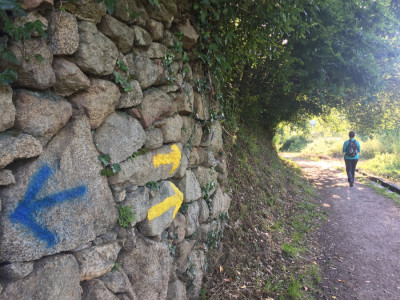
Share


The Camino Portugués is one of the historic pilgrimage routes to Santiago. Following the discovery of the Apostle’s tomb, the Portuguese monarchy encouraged cultural and economic exchanges and promoted pilgrimages from Lisbon beginning in the 11th century and, most notably, in the 12th century. Today, the Portuguese Way is the second most popular route among walkers and cyclists, second only to the French Way.
With a more accessible route than other itineraries, the Portuguese Way traverses Portugal from Lisbon to Santiago de Compostela via three routes: the inland route, the central route, and the route along the Atlantic coast. Today, we’re traveling with our mail carriers along the Galician sections of this route and will tell you what to see and do along the way.
We’d also like to remind you that Correos offers services in Portugal as well, such as Paq Mochila—Correos’s luggage transport service from stage to stage, available from Porto on both the Central Portuguese Way and the Coastal Portuguese Way—and Paq Mochila Directo, the direct luggage shipping service from Porto to Santiago de Compostela.
From Lisbon to Santiago
Lisbon is the traditional starting point of the Portuguese Way. From the Portuguese capital, the route most favored by pilgrims is to travel the length of the country from south to north along its central branch, which passes through such notable cities as Santarém, Coimbra, Porto, and Valença do Minho. The route enters Galicia via the town of Tui, which is reached by crossing the International Bridge over the Miño River.
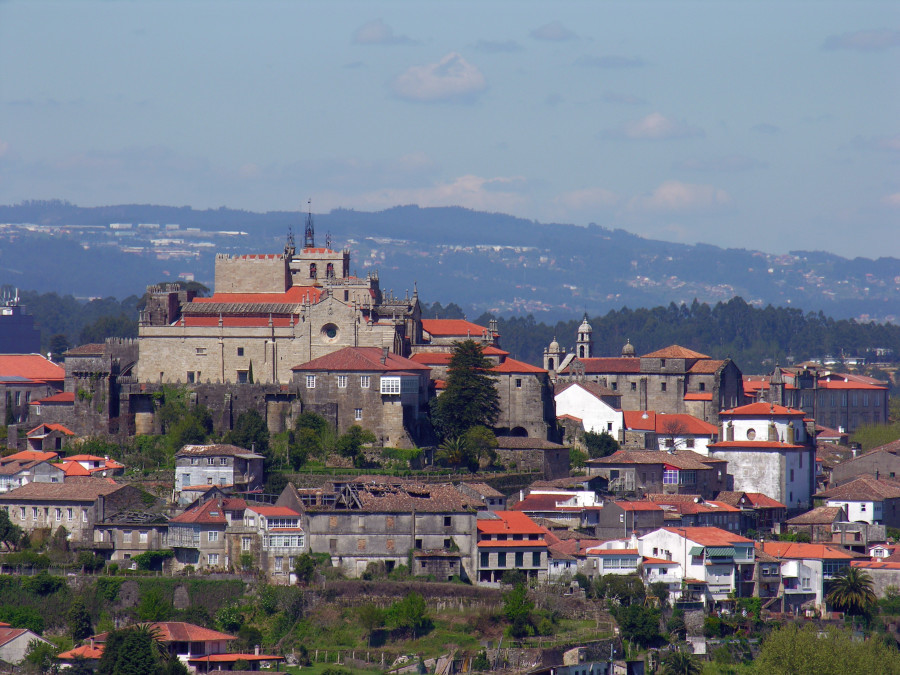
On this pilgrimage to Santiago, travelers should not miss a visit to the Cathedral of Santa María de Tui, dating back to 1120, which surprises pilgrims with its appearance as a castle or fortification. Tui’s historic district, its riverside promenade, and the former pilgrims’ hospital—now converted into the Diocesan Museum and Archives—round out the visit to this border town.
After discovering unique natural landscapes such as the banks of the Louro River, pilgrims will arrive in O Porriño, known for its granite quarries. Buildings designed by architect Antonio Palacios—known for designing the Telecommunications Palace in Madrid—dot this town in Pontevedra, where he was born. Among them, the City Hall stands out.
On the way to Redondela, pilgrims should stop in Mos, where they can visit the Pazo de los Marqueses. After resting, be sure to visit the historic center of Redondela, whose streets are marked with Sargadelos plaques. Its industrial architecture, characterized by its two railway viaducts, and the spectacular landscape of the San Simón cove round out the wonders of this town, which is also famous for its cuisine.
Redondela is the point where the various Portuguese routes to Santiago converge. So, before continuing our Camino to the Apostle’s tomb, let’s take a tour of the main stages of the Portuguese Coastal Way.
Portuguese Coastal Route from Porto
Porto is the starting point of this route, which was recognized as an official pilgrimage route by the Xunta de Galicia in 2010. Its popularity among pilgrims is undeniable, and the beauty of its landscapes is unique. In Portugal, pilgrims will discover cities such as Viana do Castelo and Caminha, and will always be accompanied by the Atlantic Ocean.
The route enters Galicia via A Guarda, where a visit to Monte de Santa Trega is a must. At the summit, in addition to admiring the mouth of the Miño River, pilgrims can explore the archaeological site, one of the finest examples of Castrean-Roman culture.
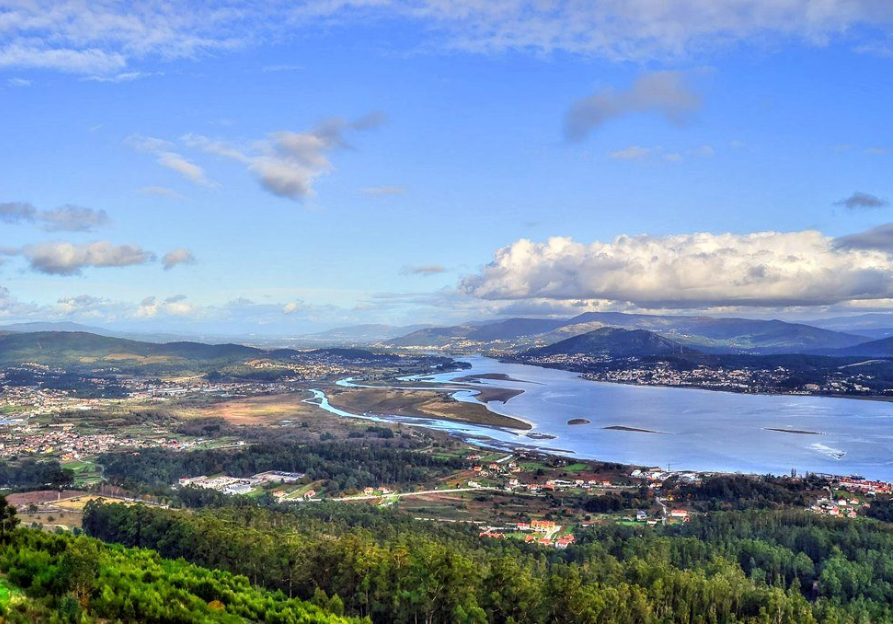
The Galician coast becomes part of the Camino between A Guarda and Baiona, where Monterreal Castle—now a Parador hotel—awaits us. But first, pilgrims should stop in Oia to enjoy its cobblestone streets, the Atlantic Ocean in all its glory, and, of course, the Monastery of Santa María.
Oysters, Hot Springs, and the Pedrón
Before reaching Redondela, pilgrims will pass through Vigo, Galicia’s largest city. Though industrial in character, Vigo offers plenty of attractions, such as its small, now-restored historic district. If the weather is nice, a boat trip to the Cíes Islands is a must.
The Portuguese Coastal Way continues from Vigo to Redondela, where all the routes coming from Portugal converge. Pontevedra is the common destination. And there, the Church of Our Lady of the Pilgrims—patron saint of the city and of the Portuguese Way—awaits us. During this stage, we’ll pass through other highlights along the route, such as Arcade—a town well-known for its oysters—and Pontesampaio, where we’ll cross the 10-arch bridge that played a central role in the final battle against the French.
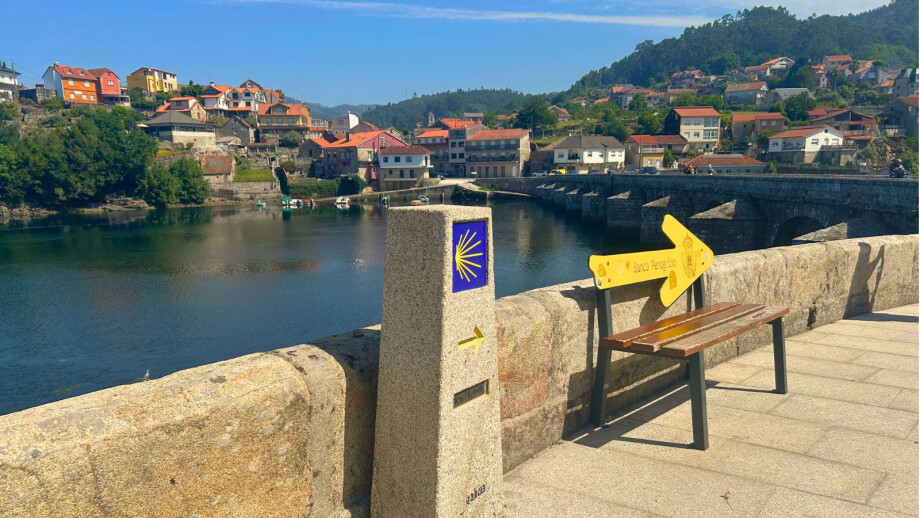
The next stage of our Portuguese Way runs from Pontevedra to Caldas de Reis, a spa town where we can recover from so many days of exertion in its healing waters—whether by drinking water from its springs or visiting one of its famous spas.
Padrón awaits pilgrims as the final stage before reaching the Cathedral of Santiago. According to Jacobean legend, the Apostle’s disciples arrived in this town in A Coruña with his body, having brought it from Palestine. To see this for ourselves, we can visit the Church of Santiago, located at the end of the Espolón, and view the so-called Pedrón, a Roman altar that, according to legend, was used to moor the Apostle’s boat.
Padrón is also known for its peppers (some spicy, others not) and for being the birthplace of two Galician writers who are as famous as they are internationally renowned: Rosalía de Castro and Camilo José Cela.
The Spiritual Route of the Portuguese Way
Before setting off for Santiago, we’ll take a detour to explore another variant of the Portuguese Way that’s gaining popularity every day. This is the Spiritual Route, a path that runs from Pontevedra to Padrón along the coast.
It aims to recreate the final stretch of the Traslatio of St. James and allows pilgrims to walk alongside the Atlantic Ocean almost all the way to the end. If you choose this route, from Pontevedra you’ll need to make your way to the Monastery of Armenteira, founded by the Cistercian Order. Along the way, you can also visit the Monastery of San Xoán de Poio, a medieval church designated as a historic-artistic site. You can also stop in Combarro, a beautiful coastal town famous for its hórreos.
Up to Vilanova de Arousa, pilgrims will trade the sea for lush, green landscapes, vineyards, and rural scenery. The final stretch of this adventure is by boat to Pontecesures, followed by the last few kilometers to Padrón on foot. This stage offers the chance to experience the world’s only maritime-river Way of the Cross, consisting of 17 stations.
A View of Santiago from Above
Padrón-Santiago de Compostela is the final stage of the Portuguese Way and is common to all its routes. Before reaching the finish line, pilgrims can still make several stops, such as at the Baroque Shrine of A Escravitude or at the top of Agro dos Monteiros, where the cathedral’s towers come into view for the first time.
The Portuguese Way splits once more before entering Santiago, so pilgrims must choose between entering from the southern side of the city, through the modern Santa Marta neighborhood, or entering the Galician capital via the Conxo neighborhood. If you choose the latter, don’t miss the monastery and church of Santa María de Conxo, which features a beautiful 12th-century Romanesque cloister.
Pilgrims will enter Santiago’s historic center by crossing the Alameda and passing through the Porta Faxeira, one of the seven gates in the old city wall. On Rúa do Franco, you can make one last stop along the Camino to enjoy the local cuisine or visit the post office at number 4, where we offer a luggage storage service for backpacks, walking sticks, or bicycles.
The Plaza del Obradoiro awaits pilgrims, who are sure to marvel at the Baroque façade of the Cathedral of Santiago, as well as the other buildings flanking the square: the Hostal de los Reyes Católicos, a former pilgrims’ hospital; the Pazo de Raxoi, now the seat of Santiago’s city government; and the Pazo de San Xerome, home to the University.
If you have time, be sure to enjoy Santiago once you’ve completed the rituals: the embrace of the Apostle, the Pilgrim’s Mass, and receiving the Compostela. To help you make the most of your visit, here are ten must-see and must-do activities in Santiago.
Correos is with you on your Portuguese Way
Correos has a strong presence along the Portuguese Way, and not just through its offices located at various stages of the route.
As we’ve already mentioned, our daily backpack transport service is available on the Portuguese Way starting from Porto. Pilgrims who want to walk unencumbered can sign up for this service whether they’re taking the central Portuguese Way or the coastal Portuguese Way. The Paq Mochila service is also available on the stages of the Spiritual Variant.
You can now book the Paq Bicicleta online to ship your bike back to any post office upon completing your Camino.
And if you need to send a suitcase to Santiago, forget something at a hostel, or want to ship your belongings back home, you can count on our Paq Peregrino. With this service, you can send your luggage or package to any Spanish accommodation along the Portuguese Way.
If you start your Camino in Porto, we offer the Paq Mochila Directo service, which allows you to ship suitcases, backpacks, or personal belongings directly from Porto to Santiago, so all you have to worry about is enjoying the experience.
And that concludes our guide to the Portuguese Way. We hope it helps you on your pilgrimage to Santiago, and we remind you that in the The Caminos section of this website, you can find detailed information on all the stages, difficulty levels, and available accommodations in each town.
In addition, you can always contact the Friends of the Way Associations if you have any questions. Have a great journey, pilgrims!
Your email address will not be published.
Mandatory fields are marked with *