


Share


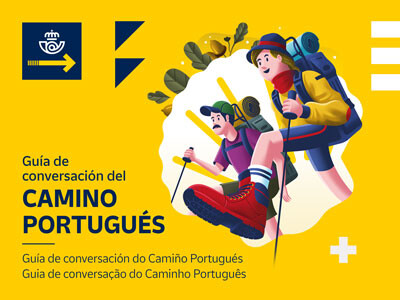
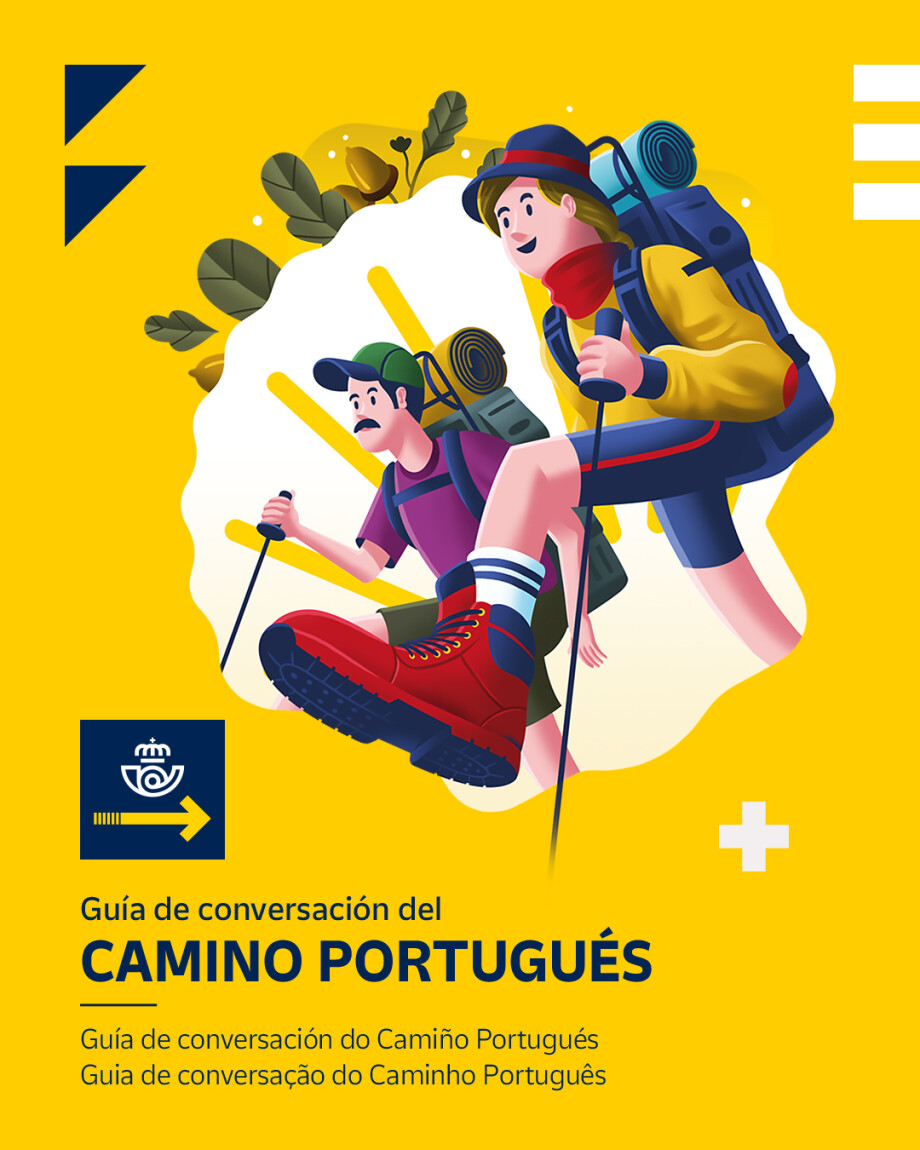
Discover, through language, the different cultures that the Camino Portugues (The Portuguese Way) encompasses. This is the invitation we extend to pilgrims with the Conversation Guide, an illustrated booklet that helps them discover common terms and words related to the Camino in the languages of the territories that pilgrims cross on their way to Santiago.
Conversation Guide for the Camino Portugues is the latest initiative from #CaminoSostenible, the social responsibility project through which Correos seeks to promote the human, cultural and natural heritage of the Camino de Santiago.
This conversation guide aims to highlight the three languages spoken in the regions along the Portuguese Way: Portuguese, Spanish and Galician. Through everyday words and expressions related to the Camino de Santiago, we encourage you to learn and integrate the different languages during your pilgrimage.
This new guide, illustrated by Mr Reny, has several sections in which pilgrims can discover some of the most common expressions related to the Camino, such as mojón (milestone), albergue (hostel) and flecha amarilla (yellow arrow).
But it also includes terms that you will use in your daily life related to your stay in accommodation, when going to a restaurant or post office, or if you need to use any means of transport.
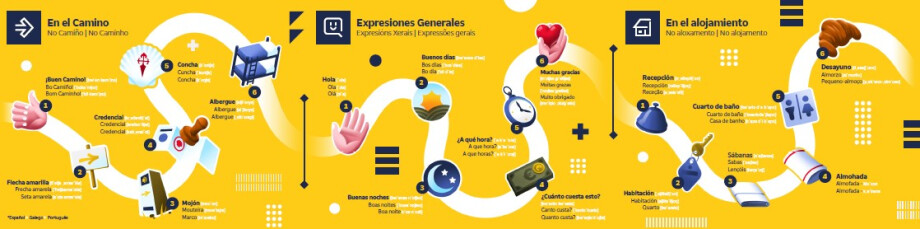
All terms appear in the three languages used on the Portuguese Way: Spanish, Galician and Portuguese. They are also illustrated for quick visual recognition and include phonetic translations to facilitate learning their pronunciation.
A route rich in language and with an international profile
Correos has chosen the Camino Portugues because it is one of the most linguistically rich routes, with up to three different languages spoken along its length.
In addition, 70% of those who travel this route are international pilgrims. The United States, Germany and Italy top this ranking, followed by Spain and Portugal as the main countries of origin for pilgrims on the Portuguese Way.
The aim of this guide is to bring the cultural richness of this route to the nearly 200,000 pilgrims who completed it in 2025.
The guide is also available in two versions: one in Spanish, English and Portuguese and another in German, English and Portuguese, in order to reach as many people as possible.
Available at post offices and hostels
Conversation Guide for the Camino Portugues will soon be available at the main post offices along the route.
Keep an eye on our social media channels, where we will announce the dates from which they will be available at each office and how to get them for free.
The guides will also be available at most hostels and accommodation along the route, both on the central Camino Portugues and the coastal route.
And for those who are unable to enjoy the Camino Portugues this year, you can download it here in PDF format:
Luggage transport on the Camino Portugues with Correos
The Camino Portugues is also the focus of Correos' new developments for 2026. From 16 March, the Paq Mochila service, which transports luggage from hostel to hostel, will be available on the Camino Portugues from Porto.
Pilgrims travelling this route can now hire the Paq Mochila service from the start of their journey in Portugal, whether they choose the central Portuguese Way or the Portuguese Way along the coast.
The system will be the same as usual: a postman will first visit the pilgrim's accommodation to collect their luggage and then transfer it to their next accommodation. This means they can walk unencumbered and enjoy their experience.
Along with the Paq Mochila service, Correos will continue to offer pilgrims other services to simplify their logistics. Among these is the Paq Mochila Directo, which allows pilgrims to send suitcases or packages directly to Santiago. This way, they can walk unburdened and worry-free, knowing that their luggage will be waiting for them at the end of their Camino.
Once in Santiago, pilgrims simply need to visit the Correos office located at Rúa do Franco, 4, just a two-minute walk from the Cathedral. This office is open every day (including Saturdays, Sundays, and holidays) from 8:30 a.m. to 8:30 p.m.
At the same office, you can also use the Paq Bicicleta service to ship your bike back home once you’ve completed the Camino. This service requires advance booking, so when you arrive in Santiago, all you’ll have to do is stop by the office and ship your bike using our special packaging.
The post office on Rúa do Franco also offers a luggage storage service where you can leave your backpack, bike, or walking stick and enjoy the city unencumbered.
We hope you enjoy the guide as much as we enjoyed making it.
Bom Caminho!, Bo Camiño!, ¡Buen Camino!
Your email address will not be published.
Mandatory fields are marked with *