
Camino Teammates
Share


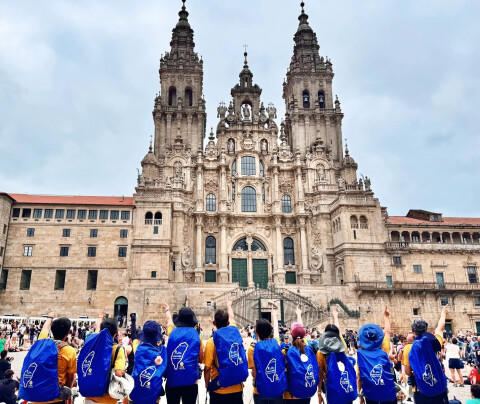
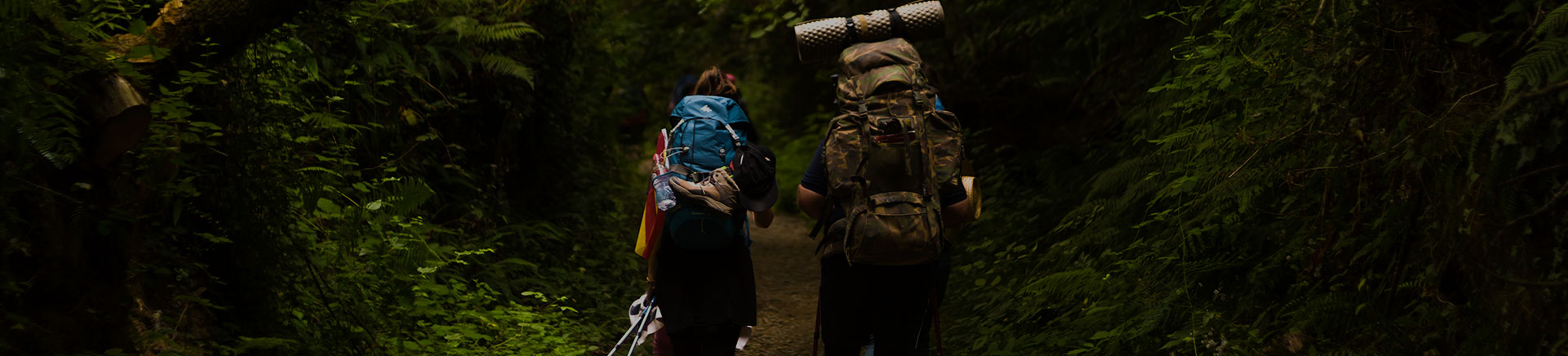
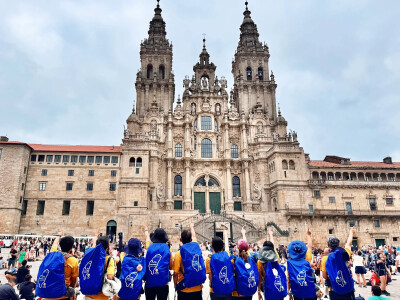
Every year, thousands of pilgrims arrive on the Camino de Santiago seeking sport, culture, nature, or personal growth. Among them, for the past three summers, there has been one group that draws particular attention: dozens of young people walking together with distinctive blue backpacks.
They are students from Guangwu High School, a public secondary school in Hsinchu, Taiwan, for whom the Camino is much more than a journey. It is an educational experience that begins long before they arrive in Spain and continues even after they reach Santiago de Compostela’s Obradoiro Square.
Eight Months of Preparation Before Setting Off
Joining this adventure requires much more than simply signing up for a trip. Students spend eight months preparing after school and during their summer holidays.
Their preparation includes physical training, hiking assessments, and educational sessions designed to help them navigate the challenges of the Camino. The school also evaluates qualities such as a willingness to learn, the ability to face difficulties with initiative and optimism, and the readiness to represent Taiwan to the people they will meet along the route.
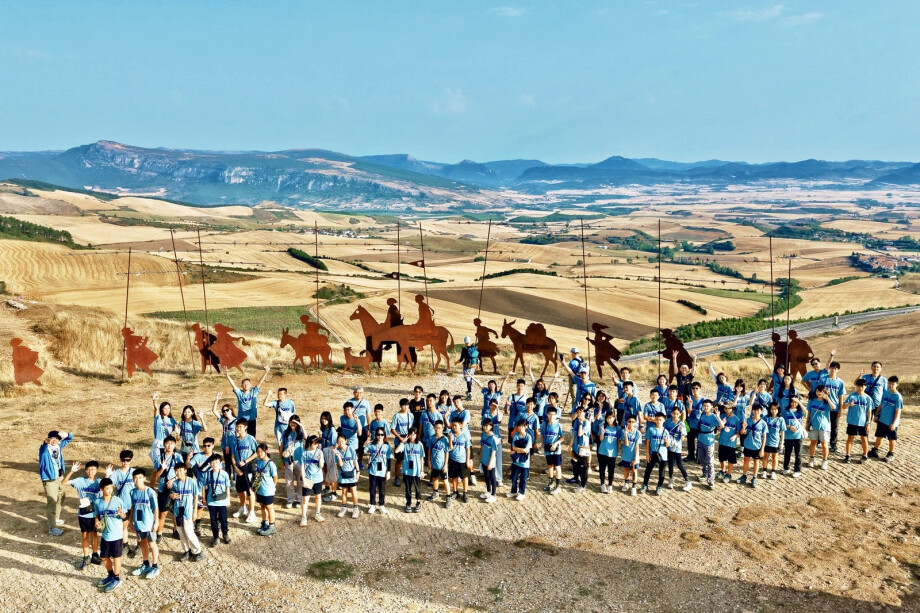
The programme is structured around fourteen thematic units covering subjects such as physical conditioning, backpack organisation, Spanish history, literature, visual arts, languages, financial literacy, and ecology.
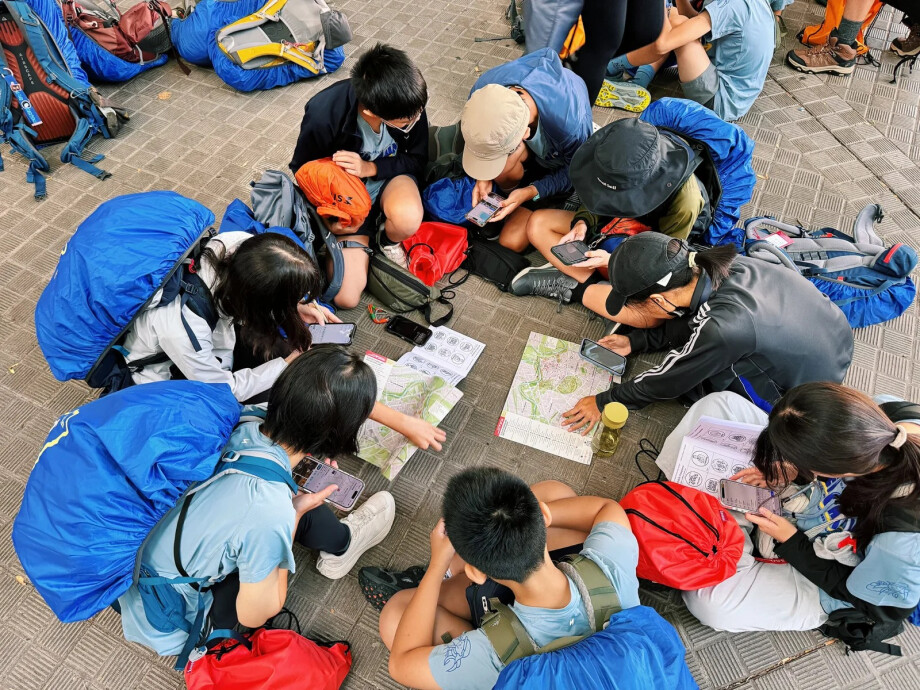
Everything they learn has a practical application during the pilgrimage. Spanish and English classes help them communicate with fellow pilgrims and order meals; financial literacy lessons allow them to manage their daily budget; and backpack preparation encourages them to consider carefully the weight and usefulness of every item they carry.
Discovering Spain Before Walking Through It
Before arriving on the Camino, students study some of the key events and figures that have shaped Spanish history and culture.
They learn about the Roman Empire, the great maritime explorations, and the Spanish Civil War. They also explore the work of writers such as Miguel de Cervantes, while geography, ecology, and art lessons provide them with the tools to better understand the landscapes, monuments, and cities they will encounter along the way.
As a result, when they reach some of the Camino’s most iconic locations, they do more than simply observe them. They connect what they see with the knowledge they have acquired during months of preparation.
A project that grows every year
The first edition of this initiative took place in 2024, covering approximately 120 kilometres from Sarria to Santiago de Compostela.
In 2025, the experience expanded to begin in O Cebreiro, increasing the walking distance to around 162 kilometres.
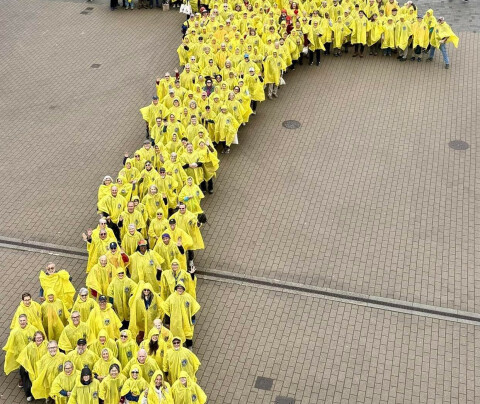
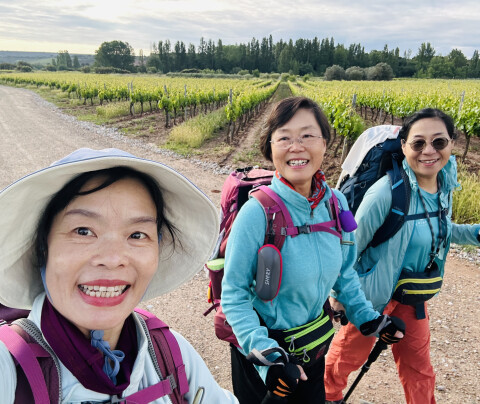
The 2026 edition has been the most ambitious so far. A total of 75 participants, including students, teachers, and volunteer family members, completed an itinerary of approximately 183 kilometres. The route combined different sections of the French Camino before continuing through Galicia to Santiago.
One of the most notable additions was one of the Camino’s most iconic stages: the route between Saint-Jean-Pied-de-Port and Roncesvalles. The students crossed the Pyrenees on foot, taking on a mountainous 24-kilometre stage where fog, steep gradients, and physical exertion tested the skills and resilience they had spent months developing.
Learning Continues at the End of Every Stage
In addition to managing everyday tasks such as doing laundry, preparing for the following stages, and coordinating group work, students take part in a variety of activities related to the educational project. They keep travel journals, prepare postcards, and interview fellow pilgrims.
Independence is a central aspect of the experience. According to the school’s director, if students wish to use luggage transfer services between stages, they are responsible for finding the information themselves, contacting service providers, and managing the arrangements.
Sharing Taiwan Through the Camino
One of the most distinctive goals of the initiative is to encourage cultural exchange.
Before travelling, students reflect on how to introduce Taiwan to people who know little about their country. Then, during the Camino, they have the opportunity to put these ideas into practice.
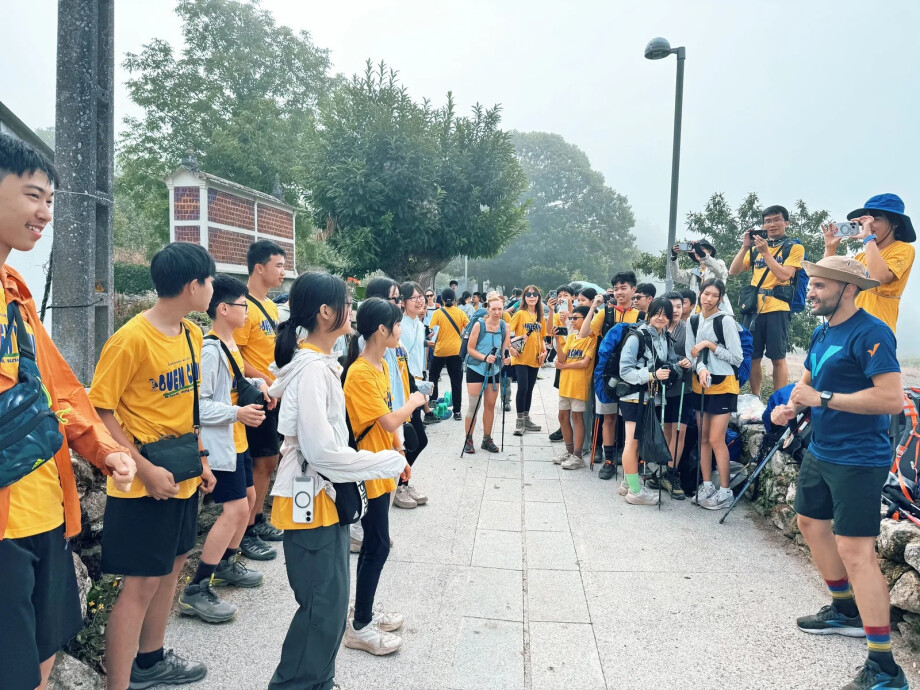
Along the route, they organise activities in small groups to interact with other pilgrims through music, calligraphy, and introductory Chinese language lessons.
These experiences help them develop intercultural communication skills and understand that meaningful dialogue between people from different backgrounds requires adaptability, initiative, and patience.
A Camino That Continues to Teach
After three consecutive editions, the blue-backpack project of Guangwu High School continues to grow. The question now seems inevitable: what awaits them in the next edition? Which new sections of the Camino will they discover?
Whatever the answer may be, if you meet them along the way, do not hesitate to offer a few words of encouragement. For these young pilgrims, every greeting, every conversation, and every kilometre is part of an adventure that still has many chapters left to be written.
If you would like to follow their journey, you can find them on the Facebook group 光武國中_西班牙走讀 GuangWu Walker, where they share their learning experiences and travels.
Original text in Traditional Chinese: Maple Chen - camino.tools
Photo credits: Guangwu Public High School, Hsinchu (Taiwan)
Your email address will not be published.
Mandatory fields are marked with *